Free Daily Podcast Summary
All Souls Parish Sermons: Daily Summaries Delivered
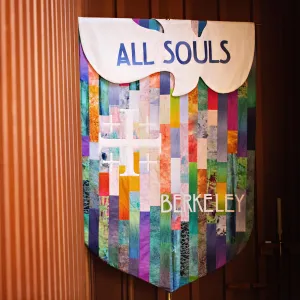
by All Souls Parish, Berkeley
These are the weekly sermons of All Souls Parish in Berkeley, CA.
Latest Episodes
The most recent episodes — sign up to get AI-powered summaries of each one.
- 1 weeks ago
Sixteenth Sunday after Pentecost
the Rev. Phil Brochard The sermon argues that forgiveness is essential to both the nature of God and the life of Christian community. Beginning with Francis of Assisi's addition of pardon to the Canticle of the Creatures, it presents forgiveness as something as fundamental as the rest of creation. Jesus' parable of the unforgiving servant makes the point through an enormous contrast: a servant forgiven an impossibly large debt refuses to forgive a much smaller debt owed to him. God's extraordinary mercy toward us calls us to extend mercy to others. Forgiveness does not mean forgetting harm, permitting abuse, or pretending wrongdoing did not occur. Rather, it means relinquishing revenge and refusing to hold another person's debt forever. It may require considerable time and patience. Ultimately, the sermon insists that a community not grounded in forgiveness is not grounded in God, because the mercy we give reflects the mercy we have received.
- 2 weeks ago
Feast of Creation in Christ
the Rev. Emily Boring The sermon celebrates the Feast of Creation in Christ by exploring the Christian belief that everything is created, sustained, and ultimately gathered together in Christ. Beginning with the preacher's awe-filled memory of watching a humpback whale repeatedly slap its tail against the ocean at sunset, the sermon contrasts scientific explanation with the deeper experience of wonder and relationship. Genesis and John's Gospel reveal creation not as something God made and left behind, but as an ongoing expression of God's creative love. The incarnation of Christ reveals God's relationship with matter and the profound interconnectedness of all existence. A whale—and every human being—is part of a vast web involving stars, oceans, microorganisms, food webs, and cycles of matter and life. Recognizing Christ within this interconnected creation transforms environmental responsibility: we care for the world not primarily because of guilt, fear, or obligation, but because we recognize our relationship with it and learn to love it.
- 2 weeks ago
Memorial Service of Howard Perdue
the Rev. Phil Brochard
- 3 weeks ago
Fourteenth Sunday after Pentecost
the Rev. Dr. Mark Richardson The sermon continues the previous week’s Gospel lesson, in which Peter boldly identified Jesus as the Messiah. The preacher approaches Peter sympathetically, seeing him as a stand-in for all of us: sincere in his faith, courageous enough to make a great declaration, yet not fully aware of what that declaration will demand. Like Peter stepping onto the water, he understands enough to take the first step, but fear and incomplete understanding soon reveal his limits. Immediately after Peter declares Jesus to be the Messiah, Jesus begins explaining what his messiahship actually means. He will go to Jerusalem, suffer at the hands of the authorities, and ultimately be killed. Peter cannot accept this. His response is not a gentle disagreement; he rebukes Jesus, insisting that this must never happen. Jesus responds with equal force: “Get behind me, Satan.” The preacher emphasizes the extraordinary intensity of this confrontation. Peter is presenting precisely the temptation Jesus has already rejected—the possibility of exercising power according to the world's familiar systems rather than following God's radically different way. The argument therefore represents much more than a disagreement about what will happen to Jesus. Peter is confronting a choice that will eventually confront every disciple: whether to seek security within established institutions and systems of power or follow Jesus into a radically different understanding of life, power, suffering, and selfhood. Had Peter understood from the beginning where following Jesus might lead, the preacher wonders whether he would have followed at all. Jesus' path threatens not simply Peter's safety but his entire understanding of himself and the life he expected to live.
- 4 weeks ago
Thirteenth Sunday after Pentecost
the Rev. Emily Boring Jesus’s question, “Who do you say that I am?”, is not a question Christians answer once and for all. We inherit understandings of Jesus from scripture, tradition, theology, worship, and culture, just as the disciples interpreted Jesus through their own religious history and political circumstances. But Jesus asks us to bring those inherited understandings into conversation with what we ourselves have experienced. The preacher illustrates this through worship at the U.S.–Mexico border, where Christians on opposite sides of the wall pray, sing, exchange the peace, and celebrate Eucharist together. There, the wall—an instrument of separation—becomes like both cross and altar, making tangible the claim that Christ’s love overcomes division. Theology is therefore a lifelong conversation between inherited faith and lived experience. Our answers will always be partial, just as Peter could correctly identify Jesus as Messiah while still misunderstanding what that meant. Christian faith is less about possessing a perfect answer than continually allowing Jesus’s question to challenge and transform us: Who do you say that I am, and how will your answer shape your life?
- Aug 16, 2026
Twelfth Sunday after Pentecost
the Rev. Michael Lemaire Rather than defending Jesus’ harsh treatment of the Canaanite woman, the sermon asks whether the encounter actually changed Jesus. The woman crosses cultural, religious, and gender boundaries to seek healing for her daughter. Jesus initially rejects her, describing his mission as limited to Israel and comparing outsiders to dogs who should not receive the children’s food. But the woman brilliantly turns Jesus’ image around: even dogs receive crumbs from the master's table. Her persistence and love expose the abundance of the grace Jesus carries and challenge the limits he has placed around his mission. Jesus listens, changes his response, and heals her daughter. The sermon suggests that this may reveal something profound about divine love: genuine love means being open enough to be moved and changed by others. Perhaps encounters like this helped Jesus understand that his mission extended beyond Israel to all people. Even more provocatively, this mother’s willingness to risk humiliation and rejection for someone she loved may have offered Jesus an example of the self-giving love he would ultimately embody on the cross.
- Aug 10, 2026
Eleventh Sunday after Pentecost
the Rev. Phil Brochard Following the execution of John the Baptizer, Jesus seeks solitude to grieve and pray while his disciples cross the Sea of Galilee. During the night, they become trapped in a storm. In the exhausting “fourth watch,” Jesus comes toward them across the water and says, “Take heart. I am. Do not be afraid.” The sermon emphasizes that “I am” echoes the biblical language of God’s divine presence. Peter steps out of the boat toward Jesus but becomes frightened by the storm and begins to sink. When he cries, “Lord, save me,” Jesus immediately reaches for him. The preacher hears Jesus’ question—“You of little faith, why did you doubt?”—not as condemnation but compassion: I am here, and I will hold on to you. Faith, the sermon argues, is not intellectual certainty, optimism, or a guarantee that life will be easy. Faith is trust—where we place our hearts. Sometimes we choose to step into storms; sometimes storms find us. Faith does not promise that we will never be frightened or overwhelmed. It promises that we will not be abandoned.
- Aug 2, 2026
Tenth Sunday after Pentecost
the Rev. Phil Brochard The sermon presents Matthew 14 as the story of two contrasting feasts. Herod's banquet ends with the execution of John the Baptist, revealing a kingdom built on fear, political power, and violence. Jesus, grieving John's death and perhaps fearing for his own life, withdraws briefly before responding to the crowds with compassion instead of despair. When the hungry multitude gathers, the disciples assume people must depend on ordinary political and economic systems for food. The preacher contrasts this with Roman coins proclaiming the emperor as the source of sustenance. Jesus instead blesses, breaks, and shares five loaves and two fish until everyone is fed with abundance. The feeding miracle proclaims that God's kingdom—not earthly rulers—is the true source of life. The sermon concludes by connecting this story to the Eucharist. Christians gather each week around Christ's table because it reminds them where true nourishment is found and, ultimately, which feast they belong to.
About All Souls Parish Sermons
These are the weekly sermons of All Souls Parish in Berkeley, CA.
Customized Recaps
AI-powered recaps with compact key takeaways, quotes, and insights.
Straight to Your Inbox
Get key takeaways from All Souls Parish Sermons in a 5-minute read.
Save Hours Every Week
Stay current on your favorite podcasts without falling behind.
Frequently Asked Questions
What is Podzilla's All Souls Parish Sermons daily summary?
It's a free AI-powered email that summarizes new episodes of All Souls Parish Sermons as soon as they're published. You get the key takeaways, notable quotes, and links & mentions — all in a quick read.
How does the All Souls Parish Sermons podcast summary work?
When a new episode drops, our AI transcribes and analyzes it, then generates a personalized summary tailored to your interests and profession. It's delivered to your inbox every morning.
Is this an official All Souls Parish Sermons product?
No. Podzilla is an independent service that summarizes publicly available podcast content. We're not affiliated with or endorsed by All Souls Parish, Berkeley.
Can I get summaries of other podcasts too?
Absolutely! The free plan covers up to 3 podcasts. Upgrade to Pro for 15, or Premium for 50. Browse our full catalog at /podcasts.
What topics does All Souls Parish Sermons cover?
All Souls Parish Sermons covers topics including Religion & Spirituality, Spirituality. Our AI identifies the specific themes in each episode and highlights what matters most to you.
Start getting All Souls Parish Sermons summaries tomorrow morning.
Free forever for up to 3 podcasts. No credit card required.
Free forever for up to 3 podcasts. No credit card required.