Free Daily Podcast Summary
Adult Child of Dysfunction: Daily Summaries Delivered
by Tammy Vincent
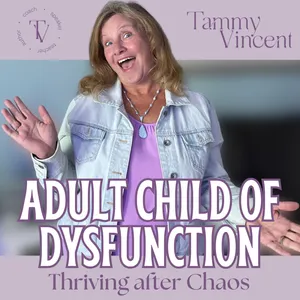
“Child of Dysfunction” is your guide into the world of resilience and healing. Hosted by Tammy Vincent, the adult child of two alcoholic parents, this podcast delves deep into the experiences of growing up in a chaotic and dysfunctional environment, facing childhood neglect, abuse, and trauma while overcoming adversity. With personal insights and expert interviews, we explore the challenges and triumphs of adults who grew up in these toxic environments, and healed. We learn how to navigate these profound inner wounds through a variety of modalities including, but not limited to mindfulness, NLP practices, transformational coaching. We will help people uncover the darkness and emerge into the light as confident, thriving, empowered adults. This podcast is literally for anybody that has been subject to the complexities and cruelties that life can send our way. It is for people at any stage of their healing journey, or even those that want to help a loved one navigate their pain. Tammy Vincent, a survivor and thriver, has transformed her life from the challenges of being an adult child of two alcoholic parents. With a Masters in Education and addiction and recovery certifications, she's a beacon of hope for others on their paths to transformation.
Latest Episodes
The most recent episodes — sign up to get AI-powered summaries of each one.
- Today6 min
E 400: Tammys Takes #62: Before You Say Yes—Try This First
How many times have you said “yes” before you even stopped to ask yourself if you actually wanted to?For adult children of dysfunctional families, people-pleasing can become so automatic that saying yes doesn’t even feel like a decision—it feels like a reflex.After my conversation with psychotherapist Michelle Farris about codependency, boundaries, and self-trust, I wanted to dig deeper into what happens in those few seconds before we automatically agree to help, fix, volunteer, or take responsibility.In this Tammy’s Take, I’m talking about the power of the pause—and why creating even a few seconds of space before responding can help you interrupt old survival patterns and begin rebuilding self-trust.You’ll also learn why the discomfort you feel when you don’t immediately say yes doesn’t necessarily mean you’re doing something wrong. Sometimes that discomfort is simply what it feels like to do something different.The goal isn’t to start saying no to everyone.It’s to make sure that when you say yes, you’re actually the one choosing it.If you’re working on people-pleasing, boundaries, self-trust, nervous system regulation, or healing patterns you learned growing up in dysfunction, this Tammy’s Take is for you.And be sure to listen to my full conversation with Michelle Farris for a deeper discussion about codependency, resentment, boundaries, and recovery.Hey there, I’m so glad you’re here and tuning in! If this episode spoke to your heart, just know there’s even more support waiting for you. If you would like to grab my free Nervous System Reset Guide, you can Grab It HereYou can help support an adult child by buying a shirt here. Book Your Free Clarity and Calm Call: No Judgement, just a chat https://calendly.com/tammyvincent/clarity-and-calm-callIf you are curious about where you stand energetically, or just need a frequency boost, book your FREE biofrequency voice scan here: https://calendly.com/tammyvincent/complimentary-scan-demo if you want to take part in an amazing club, where you can get unlimited scans and free coaching every month, sign up here: $25 ($250 Value) Join For One Month Here https://workshops.tammyvincent.com/offers/JQz3QDrr/checkoutIf you would like to ask a question, and hear the answer in a future episode, please leave your question here: https://www.speakpipe.com/TammyvincentcoachingAs an international inspirational speaker, NLP Practitioner, Trauma-Informed Coach, Neurofit Trainer, and Best-Selling Author, I bring both deep personal experience and professional training to the work I do. I believe in prevention, not just intervention — and use a body, mind, and spirit approach to guide others toward becoming the happiest, healthiest versions of themselves.My holistic toolbox includes nervous system regulation, trauma-informed coaching, nutritional support, and natural healing strategies,🔑 Start Your Healing JourneyFind ALL THE THINGS HERE: Anything that I have to offer is right here✈️ Bonus for Travel Lovers!Did you know I also offer access to an amazing travel savings program that can help you save up to 70% on hotels, resorts, cruises, and more? Let’s compare your next upcoming itinerary and see how much you could save.👉 Try the Trip Check: https://calendly.com/tammyvincent/trip-check📺 Subscribe to My YouTube Channel👉 Adult Child of Dysfunction on YouTube🌟 Book Me to Speak at Your Event👉 Let’s connect: <a href="https://calendly.com/tammyvincent/speakers-event-chat" rel="noopener noreferrer" target="_bl
- Yesterday37 min
E 399: Codependency, People-Pleasing & Resentment: How to Stop Losing Yourself in Relationships with Michelle Farris
When does being loving and helpful cross the line into codependency?If you grew up in a dysfunctional family, you may have learned very early to pay attention to everyone else's needs, keep the peace, fix problems, and make sure everyone around you was okay. Those survival skills may have helped you get through childhood—but they can follow you straight into your adult relationships.In this episode of Adult Child of Dysfunction, I sit down with psychotherapist and anger management specialist Michelle Farris to talk about codependency, people-pleasing, resentment, boundaries, and rebuilding self-trust.Michelle describes codependency as a relationship pattern where we can become hyper-focused on helping, rescuing, or controlling other people while looking to them for the love, approval, and sense of worth we struggle to give ourselves.And here's where it gets tricky: codependency doesn't always look unhealthy from the outside.It can look like being the dependable one.The helper.The person who always says yes.The one who takes care of everybody.But underneath all that giving can be exhaustion, resentment, fear of disappointing people, and a quiet question: When does somebody take care of me?Michelle and I talk about how these patterns often begin in dysfunctional families, especially when a child learns that being responsible, keeping everyone happy, or putting their own needs aside is what keeps the family stable.We also get practical about what recovery can actually look like.You'll hear us discuss:• Why over-giving eventually turns into resentment• How codependency can show up with partners, parents, friends, and adult children• Why constant contact and reassurance can become part of codependent relationships• How childhood dysfunction can teach you to put yourself last• The difference between genuinely helping someone and abandoning yourself• Why difficulty saying “no” can be an important clue• How lack of self-trust keeps us looking to other people for validation• Why boundaries don't have to begin with one huge, terrifying “NO”• Michelle's simple advice to do less instead of automatically volunteering or rescuing• How detachment allows other people to experience their own choices and consequences• The power of pausing before automatically reacting or saying yes• Why the relationship you build with yourself is such an important part of codependency recovery• How family-of-origin work can help you understand where these patterns beganOne of my favorite parts of this conversation is the reminder that recovery isn't about swinging from one extreme to another. You don't have to go from doing everything for everybody to refusing to help anyone.It's about learning to pause long enough to ask:What do I actually want? What do I need? And is this really mine to take care of?Michelle describes three important areas of codependency recovery: befriending yourself, creating healthier relationships, and understanding your family of origin.And maybe the place you start isn't where somebody else thinks you “should” start.Maybe you start where you're ready.Because healing isn't about doing recovery perfectly. It's about slowly learning that your needs, feelings, wants, boundaries, and voice belong in the relationship too.CONNECT WITH MICHELLE FARRISMichelle Farris is a psychotherapist and anger management specialist who helps people create healthier relationships. She is licensed in California and also offers coaching focused on codependency and anger; in the episode, she explains that coaching is different from therapy and that childhood trauma work may require therapy.Website: counselingrecovery.comYouTube: https://www.youtube.com/@MichelleFarrismftFacebook: https://www.facebook.com/counselingrecovery/Instagram: https://instagram.com/counseling_recovery/Pinterest: https://www.pinterest.com/mshellmft/LinkedIn: https://www.linkedin.com/in/michellefarrismft/Hey there, I’m so glad you’re here and tuning in! If this episode spoke to your heart, just know there’s even more support waiting for you. If you would like to grab my free Nervous System Reset Guide, you can <a href="
- 2 days ago13 min
E 396: Tammys Takes : Are You Making Decisions From Fear? How Childhood Trauma Controls Your Choices
Are you making decisions based on what you actually want—or what you're afraid might happen if you disappoint someone?For adult children of dysfunctional families, fear doesn't always look like anxiety or panic. Sometimes it looks like people-pleasing, perfectionism, overthinking, avoiding conflict, or constantly putting everyone else's needs ahead of your own.In this episode of Tammy's Takes on the Adult Child of Dysfunction Podcast, Tammy Vincent explores how childhood trauma, emotional conditioning, and nervous system survival responses can influence the choices we make as adults.Inspired by her recent conversation with Dr. Todd Burstain, Tammy challenges you to look beyond your behaviors and ask a deeper question: Are these choices coming from who you are today, or from what you learned to do to feel safe as a child?If you grew up managing other people's emotions, avoiding criticism, or trying to keep the peace, those childhood survival strategies may still be influencing your relationships, boundaries, and sense of self.In this episode, you'll discover:Why people-pleasing and perfectionism can be fear-based survival strategies.How childhood dysfunction can influence adult decision-making.Why saying no can trigger guilt, anxiety, or fear of rejection.How nervous system regulation creates space for healthier choices.The difference between understanding your patterns and actually changing them.How to recognize when fear is making your decisions.Why someone else's disappointment doesn't mean you've done something wrong.Try the Fear or Freedom Check-InThe next time you feel pressured to say yes, make someone happy, or avoid an uncomfortable conversation, pause and ask yourself:"If I wasn't afraid of somebody else's reaction, what would I choose?"Give yourself time to regulate your nervous system before responding. Then practice making one small choice that honors your needs.Because healing isn't just about understanding why you developed certain behaviors. It's about learning that you have choices today.Free Resources & SupportFree Chaos to Calm Nervous System Reset GuideLearn practical nervous system regulation tools to help you manage triggers, interrupt automatic reactions, and create more calm in everyday life.Get your free guide: https://linktr.ee/tvincentFree Weekly Support GroupJoin Tammy every Wednesday at 8:30 AM Eastern for a supportive Zoom gathering for adult children of dysfunction. Come as you are, connect with others, and explore ways to move beyond survival mode.Find details: https://linktr.ee/tvincentConnect with TammyWebsite: https://tammyvincent.comYouTube: https://www.youtube.com/@AdultChildofDysfunctionFacebook Community: https://www.facebook.com/share/g/1EdpUrYLZr/All Resources: https://linktr.ee/tvincentRemember: Fear may have helped you survive your childhood, but it doesn't have to make your decisions in adulthood.Regulate. Rise. Return to you.Grab My FREE Nervous System Guide Here https://sites.leadconnectorhq.com/preview/JJgzLZ6znoF0KJOgTQYZ
- 4 days ago40 min
E 395: How Childhood Trauma Keeps You Living in Fear (And How to Break Free) | Dr. Todd Burstain
Are you making decisions based on who you really are, or who fear has taught you to be?For adult children of dysfunctional families, fear doesn't always look like panic or anxiety. Sometimes it looks like perfectionism, people-pleasing, overthinking, self-sabotage, or the constant need to control everything around you.In this episode of Adult Child of Dysfunction, Tammy Vincent sits down with physician, educator, and author Dr. Todd Burstain to explore how childhood trauma shapes our fear responses, why survival patterns become so deeply ingrained, and how we can begin making decisions from our authentic selves instead of our past.Drawing from more than 30 years in medicine and his book Fear Itself, Dr. Burstain explains how fear becomes the brain's default protection system and why understanding these patterns is only the beginning of changing them.In this episode, you'll discover:The seven childhood experiences that can shape our relationship with fear, including abandonment, rejection, neglect, conditional love, abuse, and chaos.Why anxiety, perfectionism, avoidance, and self-criticism can become protective survival strategies.How fear influences the brain, nervous system, and everyday decision-making.Why recognizing your triggers doesn't automatically change your responses.The power of pausing and creating a sense of safety before reacting.Dr. Burstain's 10-step framework for moving beyond fear and reconnecting with your authentic self.How neuroplasticity helps us develop new patterns and responses.Why healing isn't about eliminating fear, but learning when to listen to it and when to choose a different path.The biggest takeaway? Fear may have shaped your past, but it doesn't have to determine your future.You can learn to recognize old survival patterns, reconnect with your own voice, and begin making choices based on who you want to become.Connect with Dr. Todd BurstainWebsite: https://www.toddburstain.comBook: Fear ItselfBook Release: November 10, 2026Audiobook: Planned for Spotify on November 10, 2026.Hey there, I’m so glad you’re here and tuning in! If this episode spoke to your heart, just know there’s even more support waiting for you. If you would like to grab my free Nervous System Reset Guide, you can Grab It HereYou can help support an adult child by buying a shirt here. Book Your Free Clarity and Calm Call: No Judgement, just a chat https://calendly.com/tammyvincent/clarity-and-calm-callIf you are curious about where you stand energetically, or just need a frequency boost, book your FREE biofrequency voice scan here: https://calendly.com/tammyvincent/complimentary-scan-demo if you want to take part in an amazing club, where you can get unlimited scans and free coaching every month, sign up here: $25 ($250 Value) Join For One Month Here https://workshops.tammyvincent.com/offers/JQz3QDrr/checkoutIf you would like to ask a question, and hear the answer in a future episode, please leave your question here: https://www.speakpipe.com/TammyvincentcoachingAs an international inspirational speaker, NLP Practitioner, Trauma-Informed Coach, Neurofit Trainer, and Best-Selling Author, I bring both deep personal experience and professional training to the work I do. I believe in prevention, not just intervention — and use a body, mind, and spirit approach to guide others toward becoming the happiest, healthiest versions of themselves.My holistic toolbox includes nervous system regulation, trauma-informed coaching, nutritional support, and natural healing strategies,🔑 Start Your Healing JourneyFind ALL THE THINGS HERE: Anything that I h
- 1 weeks ago7 min
E 398: Tammys Takes #61: You Don’t Have to Be Good at Healing
What if one of the things getting in the way of your healing… is trying to be good at healing?In this Tammy’s Take, Tammy explores how easily perfectionism can sneak into the healing journey—especially for adult children of dysfunctional families who learned early in life to perform, people-please, read the room, and try to get everything “right.”After her conversation with Katrina Collier, Tammy reflects on a powerful shift: healing doesn’t necessarily mean you stop getting triggered. It may mean you recognize the trigger sooner, understand what’s happening inside you, get curious instead of immediately reacting, and recover more quickly.If you’ve ever thought, “I should be further along by now,” “Why does this still bother me?” or “I thought I already healed this,” this episode is for you.Tammy shares a different way to measure healing—not by whether you ever get angry, overwhelmed, defensive, or triggered again, but by noticing what’s different about the way you respond today.Because healing isn’t about becoming perfectly regulated or completely unbothered. It’s about learning how to experience difficult emotions without losing yourself inside of them.You don’t have to be perfect at healing. Maybe realizing that is part of healing, too.Hey there, I’m so glad you’re here and tuning in! If this episode spoke to your heart, just know there’s even more support waiting for you. If you would like to grab my free Nervous System Reset Guide, you can Grab It HereYou can help support an adult child by buying a shirt here. Book Your Free Clarity and Calm Call: No Judgement, just a chat https://calendly.com/tammyvincent/clarity-and-calm-callIf you are curious about where you stand energetically, or just need a frequency boost, book your FREE biofrequency voice scan here: https://calendly.com/tammyvincent/complimentary-scan-demo if you want to take part in an amazing club, where you can get unlimited scans and free coaching every month, sign up here: $25 ($250 Value) Join For One Month Here https://workshops.tammyvincent.com/offers/JQz3QDrr/checkoutIf you would like to ask a question, and hear the answer in a future episode, please leave your question here: https://www.speakpipe.com/TammyvincentcoachingAs an international inspirational speaker, NLP Practitioner, Trauma-Informed Coach, Neurofit Trainer, and Best-Selling Author, I bring both deep personal experience and professional training to the work I do. I believe in prevention, not just intervention — and use a body, mind, and spirit approach to guide others toward becoming the happiest, healthiest versions of themselves.My holistic toolbox includes nervous system regulation, trauma-informed coaching, nutritional support, and natural healing strategies,🔑 Start Your Healing JourneyFind ALL THE THINGS HERE: Anything that I have to offer is right here✈️ Bonus for Travel Lovers!Did you know I also offer access to an amazing travel savings program that can help you save up to 70% on hotels, resorts, cruises, and more? Let’s compare your next upcoming itinerary and see how much you could save.👉 Try the Trip Check: https://calendly.com/tammyvincent/trip-check📺 Subscribe to My YouTube Channel👉 Adult Child of Dysfunction on YouTube🌟 Book Me to Speak at Your Event👉 Let’s connect: https://calendly.com/tammyvincent/speakers-event-chat🫶 Let’s Connect📩 Email: tammy@tammyvincent.com📱 Text: 513-28
- 1 weeks ago41 min
E 397: The Damage of Words: Healing From a Covert Narcissistic Parent with Katrina Collier
What happens when the person who was supposed to make you feel safe is also the person who taught you to question yourself?In this powerful episode of Adult Child of Dysfunction, Tammy Vincent sits down with author and global keynote speaker Katrina Collier for an open conversation about growing up with a covert narcissistic mother, a passive father, and the invisible wounds that followed her into adulthood.Katrina shares how she didn't initially recognize what she'd experienced as abuse. Instead, she struggled with self-loathing, defensiveness, perfectionism, people-pleasing, hypervigilance, and an intense sensitivity to criticism—patterns she later began to understand through the lens of childhood trauma.Tammy and Katrina explore why covert narcissistic abuse can be so difficult to recognize, how gaslighting can teach a child to question their own reality, and how survival patterns developed in childhood can continue showing up decades later.They also dive into inner-child work, forgiveness, generational trauma, emotional regulation, spirituality, and Katrina's journey from self-loathing toward self-love.Katrina shares the many approaches she's explored throughout her healing journey and why she believes healing isn't about becoming someone new—it's about reconnecting with who you were before you learned you weren't safe being yourself.📖 Get Katrina's BookKatrina shares more of her personal story and healing journey in her memoir, The Damage of Words.Get The Damage of Words on AmazonIn This EpisodeWhat covert narcissistic parenting can look likeWhy childhood dysfunction can feel “normal”Gaslighting and questioning your own realityPeople-pleasing, perfectionism and hypervigilanceInner-child work and learning to give yourself what you didn't receiveMoving from self-loathing toward self-loveBreaking generational traumaForgiveness without excusing abuseRecognizing triggers and learning to respond instead of reactKatrina's spiritual and unconventional approaches to healingOne of my favorite themes from the conversation is that awareness is only the beginning. Once you can recognize the pattern, you have an opportunity to choose something different. That's where healing starts becoming change.Hey there, I’m so glad you’re here and tuning in! If this episode spoke to your heart, just know there’s even more support waiting for you. If you would like to grab my free Nervous System Reset Guide, you can Grab It HereYou can help support an adult child by buying a shirt here. Book Your Free Clarity and Calm Call: No Judgement, just a chat https://calendly.com/tammyvincent/clarity-and-calm-callIf you are curious about where you stand energetically, or just need a frequency boost, book your FREE biofrequency voice scan here: https://calendly.com/tammyvincent/complimentary-scan-demo if you want to take part in an amazing club, where you can get unlimited scans and free coaching every month, sign up here: $25 ($250 Value) Join For One Month Here https://workshops.tammyvincent.com/offers/JQz3QDrr/checkoutIf you would like to ask a question, and hear the answer in a future episode, please leave your question here: https://www.speakpipe.com/TammyvincentcoachingAs an international inspirational speaker, NLP Practitioner, Trauma-Informed Coach, Neurofit Trainer, and Best-Selling Author, I bring both deep personal experience and professional training to the work I do. I believe in prevention, not just intervention — and use a body, mind, and spirit approach to guide others toward becoming the happiest, healthiest versions of themselves.My holistic toolbox includes nervous system regulation, trauma-informed coaching, nutritional support, and natural healing stra
- 1 weeks ago9 min
E 396: Tammys Takes #60: Are You Always Reading the Room? You May Be Leaving Yourself Behind
Have you ever walked away from a conversation completely exhausted—even though nothing particularly stressful happened?Maybe it isn’t always the people who are draining you. Maybe it’s how hard you’re working while you’re with them.After my conversation with Jo Kelly, I kept thinking about an idea she shared: the difference between being interested and trying to be interesting. I loved the way Jo described it, because it made me think about something many adult children of dysfunctional families learned to do very early—constantly monitor themselves around other people.When you grow up having to read the room, that habit doesn't necessarily disappear when you become an adult. You may still find yourself watching people's reactions, questioning what you said, worrying that someone is upset with you, or adjusting yourself to keep everyone comfortable.In this Tammy’s Take, I’m digging into what I call self-monitoring and how it can quietly pull you away from your own experience.I’ll also teach you one of the practices I use all the time:Body before story.Before deciding what someone else's silence, facial expression, or reaction means, come back to what is actually happening inside of you.You don't have to immediately fix the feeling or act on it. Sometimes the first step toward rebuilding self-trust is simply noticing it.And this week, I have one challenge for you: catch yourself doing it just once.When you do, come find me on social media and tell me:“I caught myself.”Because you can't change a pattern you don't know you're in—and noticing it is already progress.Hey there, I’m so glad you’re here and tuning in! If this episode spoke to your heart, just know there’s even more support waiting for you.Book Your Free Clarity and Calm Call: No Judgement, just a chat https://calendly.com/tammyvincent/clarity-and-calm-callIf you are curious about where you stand energetically, or just need a frequency boost, book your FREE biofrequency voice scan here: https://calendly.com/tammyvincent/complimentary-scan-demo if you want to take part in an amazing club, where you can get unlimited scans and free coaching every month, sign up here: $25 ($250 Value) Join For One Month Here https://workshops.tammyvincent.com/offers/JQz3QDrr/checkoutIf you would like to ask a question, and hear the answer in a future episode, please leave your question here: https://www.speakpipe.com/TammyvincentcoachingTrials To Triumph: An Adult Child's Emotional Freedom Blueprint: Use code THRIVE25 for 75% off today. https://workshops.tammyvincent.com/offers/DSbcgrZZ/checkoutAs an international inspirational speaker, NLP Practitioner, Trauma-Informed Coach, Neurofit Trainer, and Best-Selling Author, I bring both deep personal experience and professional training to the work I do. I believe in prevention, not just intervention — and use a body, mind, and spirit approach to guide others toward becoming the happiest, healthiest versions of themselves.My holistic toolbox includes nervous system regulation, trauma-informed coaching, nutritional support, and natural healing strategies,🔑 Start Your Healing JourneyFind ALL THE THINGS HERE: Anything that I have to offer is right here✈️ Bonus for Travel Lovers!Did you know I also offer access to an amazing travel savings program that can help you save up to 70% on hotels, resorts, cruises, and more? Let’s compare your next upcoming itinerary and see how much you could save.👉 Try the Trip Check: https://calendly.com/tammyvincent/trip-check📺 Subscribe to My YouTube Channel👉 Adult Child of Dysfunction on YouTube🌟 <str
- 1 weeks ago36 min
E 395: What If You Don’t Need Fixing? From Conditioning to Inner Knowing with Jo Kelly
What if you don’t need to become a “new you”?What if some of the things you’ve spent years trying to fix about yourself aren’t actually who you are—but patterns you learned in order to feel safe, belong, gain approval, or survive the environments you grew up in?In this episode of Adult Child of Dysfunction, I sit down with Jo Kelly for a fascinating conversation about childhood conditioning, people pleasing, emotional suppression, nervous system patterns, and what happens when we stop constantly trying to improve ourselves and start getting curious about what we may need to unlearn.Jo describes her work as deconditioning. Rather than continually adding more tools, techniques, and strategies, she helps people explore the learned behaviors that may be sitting on top of their natural instincts, emotions, creativity, and inner knowing. jo kellyAnd this conversation made me think differently about something I see all the time with adult children of dysfunction:We can become so good at managing ourselves that we stop experiencing ourselves.Maybe you say something and immediately replay it in your head.You send a text and start wondering how it sounded.Someone doesn’t respond quickly enough and suddenly you’re explaining, clarifying, apologizing, or sending another message.You walk into a room and automatically start figuring out who you need to be in order to fit in.Jo shared a distinction I absolutely loved: the difference between being interested and trying to be interesting.Think about a child playing.They’re absorbed in what they’re doing. They aren't wondering whether they're playing correctly or whether everyone is impressed.They’re simply interested.But somewhere along the way, many of us learn to step outside ourselves and start experiencing life through other people’s eyes.Instead of asking, “Do I like this?”We start asking, “Will they like this?”Instead of, “What do I want to say?”We wonder, “How is this going to sound?”And instead of being present in our own lives, we can find ourselves constantly editing, managing, performing, and looking for approval. Jo described this as losing our presence while trying to control how we're perceived. jo kellyWe also talk about something that may be uncomfortable for those of us who have spent years working on ourselves:What if you don't always need another thing to fix you?Another book.Another workshop.Another technique.Another expert.Another person telling you what you should be doing.Sometimes healing may be less about learning something new and more about recognizing what you've been conditioned to believe—and beginning to unlearn it.Jo and I also explore what happens when we suppress emotions like anger, sadness, fear, or discomfort. When we learn to shut down the feelings we don't want, we can also limit our capacity to fully experience joy, love, connection, pleasure, and aliveness. jo kellyAnd naturally, this brought us back to something I teach all the time:Body Before Story.When anxiety hits, instead of immediately disappearing into the story in your head, what happens if you notice what's happening in your body first?Where do you feel it?Is it tight? Heavy? Hot? Cold? Contracted?Can you stay curious about the sensation before your mind starts creating an entire story about what it means?Jo and I talk about how returning to the body can interrupt that automatic urge to explain, manage, fix, or control everything happening around us. jo kellyUltimately, this conversation isn't about becoming somebody new.It's about asking:Who might I be underneath everything I learned I had to become?Maybe healing isn't always about adding more.Maybe sometimes it's about taking off the layers that taught you to hide, perform, suppress, please, and look outside yourself for the answers.And maybe instead of asking:“How do I fix myself?”A more interesting question is:“What am I ready to unlearn?”Connect With Jo KellyJo offers an initial 90-minute Reset as well as her 33-day Reset Journey: From Resistance to Freedom, designed to help people reconnect with their bodies and begin undoing conditioned patterns. jo kellyWebsite:To Be or Not To ActInstagram:<a href="https://www.instagram.com/tobeornottoact_jokell
Get Adult Child of Dysfunction summaries in your inbox
Free AI-powered daily recaps. Key takeaways, quotes, and mentions — in a 5-minute read.
Get Free Summaries →Free forever for up to 3 podcasts. No credit card required.
You Might Also Like
Listeners also like.

Talk2Tamara
Tamara Gestetner

The Tamsen Show
A journalist explores health, reinvention, and relationships with experts and women reshaping their lives.

You Only Know What You Know
Compass Health Center

Imperfect Love
A psychologist answers real-life questions on love, self-acceptance, and personal growth using a mindfulness-based approach.
Normalize It Forward
Discusses mental health during college, focusing on reducing stigma and supporting young adults, parents, and therapists.
Becoming UnDone
Explores how high-achievers rebuild after hitting rock bottom, facing burnout, or losing their identity.
Ask Lisa: Untangling Family Life
Psychologist Lisa Damour answers parents' questions about raising tweens and teens with evidence-based advice on mental health, behavior, and family dynamics.

After Bedtime with Big Little Feelings
Honest conversations about modern parenting challenges with practical advice and emotional support from experienced guides.

Therapy Works
The Times

We're Out of Time
Discusses the fentanyl crisis, mental health, and resilience through interviews with recovery experts, survivors, and public figures.

Thrive Through and Beyond Cancer
Season Johnson
Good Inside with Dr. Becky
A clinical psychologist provides practical guidance for handling common parenting challenges and improving parent-child relationships.
About Adult Child of Dysfunction
“Child of Dysfunction” is your guide into the world of resilience and healing. Hosted by Tammy Vincent, the adult child of two alcoholic parents, this podcast delves deep into the experiences of growing up in a chaotic and dysfunctional environment, facing childhood neglect, abuse, and trauma while overcoming adversity. With personal insights and expert interviews, we explore the challenges and triumphs of adults who grew up in these toxic environments, and healed. We learn how to navigate these profound inner wounds through a variety of modalities including, but not limited to mindfulness, NLP practices, transformational coaching. We will help people uncover the darkness and emerge into the light as confident, thriving, empowered adults. This podcast is literally for anybody that has been subject to the complexities and cruelties that life can send our way. It is for people at any stage of their healing journey, or even those that want to help a loved one navigate their pain. Tammy Vincent, a survivor and thriver, has transformed her life from the challenges of being an adult child of two alcoholic parents. With a Masters in Education and addiction and recovery certifications, she's a beacon of hope for others on their paths to transformation.
Customized Recaps
AI-powered recaps with compact key takeaways, quotes, and insights.
Straight to Your Inbox
Get key takeaways from Adult Child of Dysfunction in a 5-minute read.
Save Hours Every Week
Stay current on your favorite podcasts without falling behind.
Frequently Asked Questions
What is Podzilla's Adult Child of Dysfunction daily summary?
It's a free AI-powered email that summarizes new episodes of Adult Child of Dysfunction as soon as they're published. You get the key takeaways, notable quotes, and links & mentions — all in a quick read.
How does the Adult Child of Dysfunction podcast summary work?
When a new episode drops, our AI transcribes and analyzes it, then generates a personalized summary tailored to your interests and profession. It's delivered to your inbox every morning.
Is this an official Adult Child of Dysfunction product?
No. Podzilla is an independent service that summarizes publicly available podcast content. We're not affiliated with or endorsed by Tammy Vincent.
Can I get summaries of other podcasts too?
Absolutely! The free plan covers up to 3 podcasts, any in the catalog. Basic raises that to 15, Pro to 40 and Max to 100. Browse our full catalog at /podcasts.
How often does Adult Child of Dysfunction release new episodes?
Adult Child of Dysfunction publishes daily. Our AI generates a summary within hours of each new episode.
What topics does Adult Child of Dysfunction cover?
Adult Child of Dysfunction covers topics including Fitness, Culture, Journals, Health & Fitness, Society & Culture, Mental Health, Personal Journals. Our AI identifies the specific themes in each episode and highlights what matters most to you.
Start getting Adult Child of Dysfunction summaries tomorrow morning.
Free forever for up to 3 podcasts. No credit card required.
Free forever for up to 3 podcasts. No credit card required.