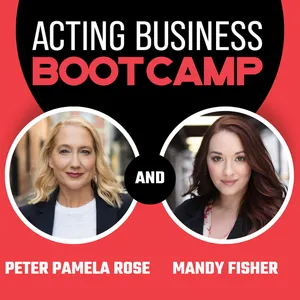
Free Daily Podcast Summary
Acting Business Boot Camp: Daily Summaries Delivered
by Peter Pamela Rose
Get key takeaways, quotes, and insights from Acting Business Boot Camp in a 5-minute read. Delivered straight to your inbox.
Latest Episodes
The most recent episodes — sign up to get AI-powered summaries of each one.
- 6 days ago16 min
Episode 389: The Actors' Time Management Problem
After 30 years of coaching, I can tell you the number one thing that determines whether you're going to work in this industry or not work in this industry. It's not talent. It's not training. It's not who you know. It's your time management. Because time is something we all have. The question is are you going to take advantage of the time you have, or are you going to be like 95% of the other actors out there and not take advantage of it? What "Working On Your Career" Actually Looks Like Some actors tell me they're working on their career every day. And when I actually look at what they're doing it's totally scattered. It's all over the place. They're scrolling casting sites. They're worrying about an agent or a manager or a casting director or a producer. Worrying is not working on your acting career. They're thinking about auditions that haven't even happened yet. One of my favorite quotes is from Michael Jordan, who said why would I worry about a shot I haven't even taken yet? Why would you worry about an audition you haven't done yet? Why would you worry about a moment you haven't even lived yet? And the other thing I see a lot is actors watching other people's careers online. Watching what their friends are booking, what their acquaintances are doing. Which is really great for your self-esteem. All of this stuff feels busy. But it is not the same thing as moving your career forward. Acting careers are not built on random bursts of effort. They are built on consistent, focused action. Those tiny little steps and tiny little decisions you make every day. That is what a career is built on. The Waiting Trap One of the biggest traps I see is what I call waiting energy. You're waiting for an audition. Waiting for an agent to call. Waiting for a callback. Waiting for the big break. Or you're telling yourself, well once I'm done with this audition or this show, then I'll get to it. That is one of the biggest traps ever. Acting careers don't move forward because you wait well. They move forward because you keep building. Gabrielle Bernstein says the universe responds to the energy you bring to it. If you are bringing waiting energy, guess what you're going to get back? A lot more waiting. But when you operate from creative action, opportunities tend to increase. Not overnight. But they do, steadily. The Three Parts of a Successful Acting Career I talk about this in the weekly classes, in the Working Actor Roadmap, on this podcast, and to anyone who will listen. The first part is the craft. Acting training, scene work, voiceover classes, voice and movement training, rehearsing material. Meditation, yoga, working out. All of it. Because that is the foundation. And it's not about thinking about rehearsing that monologue. It's about actually rehearsing the monologue. The second part is the business. Are you submitting? Are you networking? Are your materials up to date? Are you keeping your business on a schedule? Are you reaching out to agents, managers, casting directors, producers, writers? And are you staying consistent with it? It's about the baby steps every day. The third part is the core energy work. Rest, exercise, relationships, finances, meditation. Taking care of yourself and making sure your mindset is sharp. That all of your thoughts are working for you. I think of it like this. I am a cell phone and the universe is a cell phone tower. How I
- 1 weeks ago11 min
Episode 388: Actor Tools of the Trade
div]:bg-bg-000/50 [&_pre>div]:border-0.5 [&_pre>div]:border-border-400 [&_.ignore-pre-bg>div]:bg-transparent [&_.standard-markdown_:is(p,blockquote,h1,h2,h3,h4,h5,h6)]:pl-2 [&_.standard-markdown_:is(p,blockquote,ul,ol,h1,h2,h3,h4,h5,h6)]:pr-8 [&_.progressive-markdown_:is(p,blockquote,h1,h2,h3,h4,h5,h6)]:pl-2 [&_.progressive-markdown_:is(p,blockquote,ul,ol,h1,h2,h3,h4,h5,h6)]:pr-8"> _*]:min-w-0 gap-3 standard-markdown"> The Business Tools That Actually Keep Your VO Career Running One of the biggest misconceptions in voiceover is that success comes from talent plus a good booth. And yes, performance matters. Audio quality matters. But what actually creates consistency in this career is operational support. It's the systems you build that allow you to track opportunities, manage relationships, understand your income, organize your marketing, and reduce decision fatigue. Because decision fatigue is real, and it will stop you in your tracks and you will end up doing nothing. So today I want to walk you through some simple, accessible tools that you can use right now. Even if you don't have a team. Even if you don't have fancy software. Even if you feel completely disorganized. These are the tools that turn creative chaos into professional clarity. Excel or Google Sheets I know. A spreadsheet is not anyone's favorite thing. Nobody got into acting because they love spreadsheets. But spreadsheets give you something emotional actors often lack, which is objective data. If you don't have data, how will you know what's working and what isn't? How will you know how much time to keep spending on something or when to let it go or if you're underpricing yourself in a certain category? You can track auditions, bookings, client names, rates, follow-ups, usage conflicts, marketing outreach. When you track patterns you stop guessing. And we cannot have a successful career if we are constantly guessing. A spreadsheet is not restrictive. It's clarifying. Canva Canva is essentially the modern actor's design department. I know nothing about design and luckily Canva is there for social media graphics, pitch decks, rate sheets, lead magnets, ebooks, presentations. Actors often think marketing has to look DIY. It doesn't. Clean visual communication builds trust before you ever speak. I send cold leads lead magnets all the time. Sometimes it's an ebook like how to hire a voiceover actor or a checklist of what to expect when you've hired one. When you are the authority and expert in the room that's when you have true leadership within the role. Canva helps you look like a business with structure instead of a freelancer who's improvising. I use Canva Pro. You don't have to. There is plenty on the free version that makes it worth having in your arsenal. A Lightweight CRM When I say CRM a lot of actors panic. Customer relationship management systems can feel very corporate. But you can create a lightweight version with Airtable or Notion or even a spreadsheet. I have one I can send you the link to. The things you want to track are simple. Who you contacted, when, what their response was, what your email subject line was. Without those few things you can end up re-pitching the
- 2 weeks ago20 min
Episode 387: Why Talented Actors Stay Invisible
There are so many incredibly talented actors out there. And so many of them do not get seen. Meanwhile there are actors with less training booking roles more regularly. And if you are one of those highly trained actors, that is so freaking frustrating. It brings up all the not so helpful questions. Am I not good enough? Why am I not getting these opportunities? Insert your favorite self-doubt here. But here's the truth. Talent alone does not guarantee visibility. I know this as a casting director. I also know this as an actor. Talent Is Only One Piece of the Puzzle Acting is an art. Just like painting, just like dancing, just like writing. But the industry that hires actors is a business. And casting directors, I can certainly say this for myself, are not only looking for great performances. We're also asking very practical questions. Does this actor fit this role? Do they understand the tone, the energy of the project? Do I feel they are professional and prepared? And then my personal favorite: does this actor know they are a good actor? What tends to happen is actors focus entirely on craft while overlooking the business side. And if you want to make a living as an actor you need to understand that both parts matter. Actually I'd say there's a third part. One of my favorite casting directors of all time, David Katy, talks about this. It's a three part job. The art, the business, and the work on yourself. Clarity Around Your Positioning One of the reasons talented actors stay invisible is that casting directors don't know where to place them. Or they try to present themselves as everything, and that just doesn't work. Confusion makes me delete. It really does. It makes me discard and move on. Go for the low hanging fruit. If you've ever seen pictures of me I am very blonde, blue-eyed, very east coast. I look like I went to preparatory school in Connecticut. And you know why? Because that's exactly what I am. I am the boss. I am the lawyer. That's my low hanging fruit. I'll tell you an embarrassing story. When I was 16 I went to a summer course at the American Academy of Dramatic Art in New York and I wanted to do Runaways. A show about kids on the street, in foster care, drug addicted. I would love to go back to my 16 year old self and say honey, that ain't you. Any John Hughes monologue would have been so much more appropriate. But hey, I was 16. And I met a really cute boy there so that was awesome. The point is, be where you're at. Go for what you really are. Casting works insanely quickly and we need to understand in seconds where you fit. Visibility Requires Consistent Action Another reason talented actors remain invisible is that they are not consistently putting themselves out into the industry ecosystem. Most careers grow through steady participation in the professional community. Steady participation. A lot of actors wait for the industry to discover them. They wait for the phone to ring. That is just not how it works anymore. What I call putting your business on a schedule means knowing exactly what to do and when to do it throughout the year. Auditions, networking, social media, industry relationships, creating your own work, staying engaged with casting directors and collaborators. Gabrielle Bernstein says the energy you put out is the energy you attract. That steady participation energy is so important. Confidence and Presence This is the secret s
- 3 weeks ago14 min
Episode 386: Micro Habits To Keep You a Professional Voiceover Actor
The Stuff Nobody Puts in Their Instagram Carousel Everybody wants to talk about the big wins in voiceover. The national spot. The animation series. The dream agent. The viral audition story. But there are operational realities that actually determine whether you stay in this business long term, and those don't make it into anyone's Instagram carousel. These are the things that quietly make or break your career. Because voiceover is not just a performance career. It is a business, a micro business, and it runs on detail. Your EIN. Get One. Today. Most actors I talk to don't even know what this is until someone asks them for a W9 and suddenly they're panic googling at midnight. An EIN is basically a business social security number. It's free from the IRS. Do not get scammed into paying for one by a third party provider. Some will charge $75, $150, $200. Go directly to the IRS website. Getting one doesn't mean you're suddenly a corporation. But psychologically there's a shift. Once you have an EIN you start thinking like a service provider, a vendor, a contracted professional, and not just an artist hoping someone likes you. It also protects your personal information, helps with banking, helps you track income streams, and helps you build structure before you feel ready. If you have multiple income streams under one voiceover umbrella, I'd suggest creating a separate EIN for each. Keep things clean. Agents Are Not Marriages They're business relationships. And sometimes you outgrow them, sometimes they outgrow you, sometimes nothing is wrong but alignment shifts. Breaking up with an agent can feel scary and dramatic and career ending and disloyal. But often it's just a recalibration. You're not going to ghost them. You're not going to give them passive aggressive silence. Be clear and direct. Agents respect clarity, even if they're none too pleased about it. Give it time to cool off and keep that door open. You're closing a chapter, not the whole relationship. And remember, they've had this conversation numerous times even if you haven't. The Numbers Are Not the Enemy Invoices, royalty statements, late payments, rate negotiations, quarterly taxes. Not glamorous. But stabilizing. When I see actors avoid the numbers they stay in a constant state of fog and anxiety and magical thinking. Professional creatives learn to sit with the data without letting it define their self worth. Just because you made $3,000 this year or $300,000 or $3 million, it doesn't change your worth or your ability to be in this business. The money isn't a direct reflection of your talent. But it could be a direct reflection of how you manage it. Reach out about Rosemarie's money management course at hello@actingbusinessbootcamp.com and ask about the replay. It might really help you break through some of that awkwardness or anxiety you have surrounding your finances. On Professional Awkwardness Following up on an unpaid invoice can feel confrontational. I promise you it's not. You don't have to make it emotional. Something like: hey there, reaching out because I have an unpaid invoice from this date, here is the copy for your records, I appreciate your attention to this. That's it. Asking for contract clarification doesn't have to be emotional either. Hey there, I have a quick quest
- Apr 15, 20268 min
Episode 385: The Art of Consistency
There's a version of an acting career that looks like a highlight reel. Big auditions. Exciting callbacks. The moment everything clicks. Most working actors don't live there. They live in the Tuesday morning version. The one where nobody's calling, there's no audition on the calendar, and showing up anyway is the whole job. That's where I want to talk to you today. It doesn't start with a booking After 30 years as a working actor, I can tell you with real certainty: the career didn't come from the bookings. It came from who I decided to be on the days when absolutely nobody was watching. No callback waiting. No agent checking in. Just me, sitting down with my craft, saying okay. Let's go again. That's it. Not exactly a glamorous origin story. But consistency is like that. It's not cinematic. It's steady. And steady, it turns out, is exactly what a long career looks like. I've been a working actor for over three decades. Qualifying for health insurance. Making a living, some years better than others. That's freelance life. But it has been consistent, and I don't think I say that out loud enough. So I'm doing it publicly, right now. Why "waiting to feel motivated" is a trap Here's something worth sitting with: motivation is fickle. It comes and goes based on your mood, your last rejection, what you had for lunch. Systems, though? Systems show up whether you feel like it or not. Training goes in the calendar. Outreach goes in the calendar. Those tasks get a home so your brain doesn't have space to negotiate with you. Because if you let your brain negotiate, you might lose. Think about training the way you think about brushing your teeth. You don't wait to feel inspired for that. You do it because you're a person who brushes their teeth. Same energy. You do the work because you're an actor, not because every single session lights you on fire. And when those habits become automatic, you free up emotional bandwidth. More bandwidth means you show up to the work with more of yourself. Which is kind of the whole point. Quiet periods are not a verdict Three decades in, I can look back at the stretches that felt empty and see something different now. Most of them were setting up what came next. When the industry goes quiet, consistency still shows up. In the emails you send anyway. The relationships you tend. The self-tape you prep before anyone asks for it. The career is moving even when it doesn't feel like it. Quiet is not failure. Quiet is incubation. When you stop rushing to prove something, you can actually see where you're growing. Borrow from your future self Picture the version of you who works steadily. Who earns from this craft. What does that actor do today, when they don't feel like it? They train anyway. They
- Apr 8, 202612 min
Episode 284: Practice Builds Familiarity and That's Your Superpower
Here's a myth that floats around the voiceover world. Once you have a demo, a decent mic, and a couple bookings, you can kind of coast. I want to dismantle that right now. Voice acting is a motor skill, an interpretive skill, and a business skill. And all three degrade without repetition. Athletes don't stop training after a good game. Musicians don't stop running scales after a sold out show. Your instrument works the same way. Without regular contact, reads become stiff, choices become generic, tension creeps into your jaw and neck, and your instincts start to feel shaky. That's not a slump. That's what happens when you stop practicing. What Practice Actually Is On the surface voiceover looks like you just talk. But under the hood you're coordinating breath support, articulation, emotional authenticity, pacing, timing, mic technique, and script analysis all at once. That's a lot of simultaneous processing. Practice isn't punishment. It's lubrication. It keeps the system fluid and limber. You want to be able to move your elbow without it popping and cracking. Same thing with your instrument. The Warmup (Five to Ten Minutes, That's It) Start with your body. Roll your shoulders. Stretch your neck. Shake out your arms. Do some exaggerated yawns. The voice lives in the body, and this signals safety to the nervous system and reduces vocal constriction. Then activate your breath. Inhale for four and exhale on a steady S or ZZZ for as long as possible. This builds the controlled airflow that's essential for conversational reads. Add some short burst exhales too, because your internal clock matters, especially in commercial work where you need to know instinctively what a 15 feels like versus a 30 or a 60. From there, do some articulation work. Over enunciate a short paragraph. Chew the words slowly. Feel where your tongue is, where your voice naturally sits. Then gradually return to natural speech, keeping the clarity without the stiffness. Finish with some gentle humming. Slide your pitch up and down like a siren, then speak a line of copy with the resonance in your chest. Feel the tonal flexibility you have. That range is crucial for casting. What to Actually Practice Practice is not just reading scripts out loud. Real practice has objectives. Here's what I recommend rotating through during the week. Conversational realism. Take a piece of commercial copy and intentionally underplay it. Record a natural take and then one slightly more energized. Listen back. Where does authenticity drop into performance? Timing. Work with 15 second copy and challenge yourself to hit clarity, emotional arc, and brand tone without rushing or dying in that window. Emotional specificity. Pick one subtle emotion per session. Amused. Intrigued. Conspiratorial. Practice letting your tone shift without changing your volume. We often assume volume is doing one thing when it's actually doing something else entirely. Mic technique. Record the same line very close, at mid distance, and slightly off axis. Hear how intimacy and presence change depending on where you are in relation to the mic. And then the one that tends to frustrate people. Listening back. I say this a lot: actors practice speaking. Professionals practice listening back. Where did tension enter? Where did you believe yourself? Was that laugh forced? Did pacing drag? You're training your internal director, and tha
- Apr 1, 202611 min
Episode 383: How To Motivate Yourself To Change Your Behavior
I came across a Ted Talk by cognitive neuroscientist Tali Sharot about how to motivate yourself to change your behavior. And then I did what I always do. I took it, ran with it, and made it into something actors can actually use. And here's something I want you to think about before we dive in. This core work applies directly to character building too. How would your character motivate themselves to change their behavior? How do you motivate yourself to hit the behavior of the character you're portraying? While you're working on making a better life for yourself, you're also making yourself a better actor. 1. Lead With What You Want, Not With Your Fear Fear might get your attention. Mine can be quite loud and annoying. But it rarely keeps you moving. What you want to do is focus on the version of you that feels lighter, calmer, more capable. Your brain is actually wired to move toward desire. So paint the picture so clearly that you can almost walk right into it. 2. Make the Reward Immediate, Even If the Goal Is Long Term Your brain loves instant wins. So give yourself one. A tiny celebration after you train, take a class, do a warmup, send an outreach email. Just let yourself feel good. Put a gold star in your planner. Small rewards trick your nervous system into believing the change is actually paying off. This comes straight from neuroscience, by the way. Reward yourself. Don't punish yourself. 3. Break the Habit Into Something So Small You Can't Talk Yourself Out of It When I decided to re-up my workout routine, I started with 10 minutes. I said, I can do anything for 10 minutes. Something that felt almost torturous at first became easy. Four and a half years later I'm still doing that same exercise. The principle is simple. How can you talk yourself out of one page of script work? Five minutes of meditation? One outreach email? Tiny steps create momentum because you stop negotiating with yourself. You're just doing the next doable thing. And on that note, stop negotiating with yourself entirely. Make a decision and stick to it. 4. Surround Yourself With People Who Reflect Your Highest Self Back to You Inspiration is contagious. Support is contagious. Courage is contagious. Spend time with people who remind you who you are becoming, not who you have been. Let their belief in you rub off on you until it feels like your own. I see this every week in my classes. I'm teaching them, but they remind me what courage looks like. What consistency looks like. What it looks like to schedule your week so it reflects your dreams, not your fear. Let that one sit with you. 5. Borrow Energy From Your Future Self And here's the thing that stopped me cold. This cognitive neuroscientist is saying the exact same thing I talk about in my future self work. Picture the version of you who lives this change effortlessly. The one who feels grounded, consistent, confident. Ask what that version of you would choose in this moment. Let them lead. When you act from your future instead of your fear, the behavior shift sticks. A Small Favor This is an unsponsored podcast. Mandy and I record these on our own time because we love it. If you've gotten something out of this episode, please leave a five star review wherever you listen. It means so much to us.
- Mar 25, 202615 min
Episode 382: Professionally vs Personally
There's a scene in You've Got Mail where Tom Hanks tells Meg Ryan not to take something personally. It's just business. And she stops him cold. The business is her life. Of course it's personal. I think about that scene a lot. Because she's right. And also, she's stuck. Here's the shift I want you to make. Stop taking things personally. Start taking them professionally. Those sound similar. They are not. Why Actors Take Everything Personally Our instrument is us. That's the whole thing. A graphic designer can move a logo and it's fine. But when someone tells an actor to be warmer, edgier, younger, more authoritative, our nervous system doesn't hear direction. It hears: you're wrong. You're not enough. Go home. That's not what's actually happening. What's happening is market alignment. Casting is almost never about worth. It's about fit. Specification match. And actors who build long careers learn to separate identity from utility. You are a human being with inherent worth. You are also a specific service provider with a specific skillset. Those are not the same conversation. What "Taking It Personally" Actually Sounds Like They didn't like me. I embarrassed myself. Everyone else is better. I'll never book. Why do I even do this. That's emotionally fueled, identity based, and global. It turns one moment into a life narrative. I had someone say something to me in seventh grade about my glasses and I haven't put them on a single day without thinking about it. I need to let that go. And so do you, wherever yours is. Compare that to taking something professionally: interesting, that read didn't align with their brand direction. My tone might have been too strong for that buyer. Let me track this pattern. That processing is specific, curious, and contained. It asks what's useful here, not what does this mean about me. Rejection Is Not a Verdict It's feedback from a small sample size in a specific moment in time. It can mean the wrong vocal age for that campaign, a timing issue, an energy mismatch, budget politics, an internal brand shift, or just randomness. None of that equals not talented. When you take it personally, you collapse all that nuance into shame. When you take it professionally, you extract patterns that help you grow. Professional working actors are pattern analysts. They ask where they get traction most often, where they consistently stall, what adjectives keep showing up in feedback, and whether their casting lane is tightening or expanding. That mindset turns rejection into career intelligence. Criticism vs. Direction A lot of actors hear criticism when what's actually being offered is direction. And those are different things. Direction means someone is investing attention in your performance. They see potential. They believe you can pivot. They're trying to get you to the finish line. Personal thinking hears I'm failing. Professional thinking hears we're collaborating. Calibration is not humiliation. It's collaboration. Emotional Regulation Is a Career Skill You cannot eliminate emotional reactions. You're an artist and a human. But you can shorten the recovery time. That's the real work. You feel it. You name
Get Acting Business Boot Camp summaries in your inbox
Free AI-powered daily recaps. Key takeaways, quotes, and mentions — in a 5-minute read.
Get Free Summaries →Free forever for up to 3 podcasts. No credit card required.
You Might Also Like
Listeners also like.

Act Bold - Where Talent Meets A Plan
Act Bold with Anne Alexander-Sieder

The Actor's Career Compass: Your Guide to Acting in Film, Finding Auditions & Agents, and Joining SAG AFTRA
Martin Bentsen

Castability: The Podcast
The Castability App
Casting Actors Cast
Jeffrey Dreisbach & Broadway Podcast Network
The Acting Podcast from The BGB Studio
Risa Bramon Garcia and Steve Braun

The Hollywood Bound Actor Podcast with Christine Horn: Mindset | Acting | Marketing | Auditioning
Christine Horn

ACTORS! YOU ARE ENOUGH!! Podcast
Amy Lyndon
Voice Acting Mastery: Become a Master Voice Actor in the World of Voice Over
Crispin Freeman | Voice Actor
Think Bigger Actors Podcast
DaJuan Johnson

Actors Making It
Danny Barton
Brian Breaks Character
Brian Patacca

Two Unemployed Actors
Max Belmonte
About Acting Business Boot Camp
Our goal is to break down the business of becoming a working actor into a simple, actionable, step by step roadmap.We'll cover everything from creative entrepreneurialism and mastering what we call the language of the agents and casting directors, to the importance of top notch training and tools for boosting your confidence in self tapes and on the set. Ready to take your acting career to the next level? Let's get started.
Customized Recaps
AI-powered recaps with compact key takeaways, quotes, and insights.
Straight to Your Inbox
Get key takeaways from Acting Business Boot Camp in a 5-minute read.
Save Hours Every Week
Stay current on your favorite podcasts without falling behind.
Frequently Asked Questions
What is Podzilla's Acting Business Boot Camp daily summary?
It's a free AI-powered email that summarizes new episodes of Acting Business Boot Camp as soon as they're published. You get the key takeaways, notable quotes, and links & mentions — all in a quick read.
How does the Acting Business Boot Camp podcast summary work?
When a new episode drops, our AI transcribes and analyzes it, then generates a personalized summary tailored to your interests and profession. It's delivered to your inbox every morning.
Is this an official Acting Business Boot Camp product?
No. Podzilla is an independent service that summarizes publicly available podcast content. We're not affiliated with or endorsed by Peter Pamela Rose.
Can I get summaries of other podcasts too?
Absolutely! The free plan covers up to 3 podcasts. Upgrade to Pro for 15, or Premium for 50. Browse our full catalog at /podcasts.
How often does Acting Business Boot Camp release new episodes?
Acting Business Boot Camp publishes weekly. Our AI generates a summary within hours of each new episode.
What topics does Acting Business Boot Camp cover?
Acting Business Boot Camp covers topics including Arts, Film, TV & Film, Performing Arts. Our AI identifies the specific themes in each episode and highlights what matters most to you.
Start getting Acting Business Boot Camp summaries tomorrow morning.
Free forever for up to 3 podcasts. No credit card required.
Free forever for up to 3 podcasts. No credit card required.