Free Daily Podcast Summary
About Art: Daily Summaries Delivered
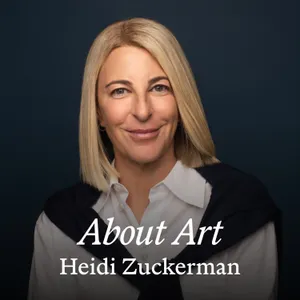
by Heidi Zuckerman
Heidi Zuckerman is a globally recognized voice in contemporary art and a passionate believer in how art can make life more better. On her podcast About Art, she has real, inspiring conversations with people she finds interesting—artists, collectors, creatives, and more—about their lives, their values, and why art matters. It’s about living artfully, seeing differently, and finding joy and connection through art—wherever you are on your art journey.
Latest Episodes
The most recent episodes — sign up to get AI-powered summaries of each one.
- 2 days ago1h 29m
Episode 238: You Have to Be Willing to Be Betrayed by Your Own Taste | Roberta Smith | About Art Special
For this special extended episode of About Art, Heidi Zuckerman sits down with Roberta Smith for an expansive conversation about looking, judgment, beauty, pleasure, criticism, marriage, retirement, and what it means to spend a lifetime paying attention to art.For more than 50 years, Roberta Smith has been one of the defining voices in American art criticism. She joined The New York Times in 1986 and became its first woman chief art critic before retiring in 2024. Her path began with the Whitney Independent Study Program, working with Donald Judd, and discovering a vocation that would place her in conversation with generations of artists and audiences.Roberta describes this conversation as her “exit interview,” and she and Heidi take their time. They discuss how to know what you think when you stand before a work of art, why looking requires rigor, and how encountering unfamiliar work can overturn even deeply held convictions. Roberta reflects on outsider art, Philip Guston, Lee Krasner and Jackson Pollock, the changing art world, and the responsibility of critics, curators, and dealers.They also explore the language of criticism, the power of writing for a public audience, the importance of passion in curating, and why beauty, taste, and pleasure deserve to be taken seriously. Roberta speaks candidly about gender, her marriage to fellow critic Jerry Saltz, the loss of a professional identity after retirement, and the possibility of finding a new relationship to the work she loves.At the heart of the conversation is Roberta's conviction that looking is an active, transformative experience—and that we must remain willing to be surprised, challenged, and changed by art.“Pleasure is its own form of knowledge.”
- 1 weeks ago41 min
Episode 237: The Life That We Create | Hunter Biden
Artist and writer Hunter Biden joins Heidi Zuckerman for a conversation about making art, confronting fear, finding beauty, and the difference between the life that happens to us and the life we create.Hunter has been drawing and making things since childhood, although painting became the center of his life much later. He talks about the daily practice that began during his recovery, the materials he first worked with, and how showing up at his painting table each morning gradually changed his relationship to himself and the world around him.He and Heidi explore the difference between making art and sharing it, and why revealing something deeply personal can require a different kind of courage. Hunter reflects on the fear that shaped many of his earlier decisions, the freedom he experiences when painting, and what it means to choose how he reveals himself after so much of his private life has been exposed publicly.Their conversation also considers the distinction between art and therapy, the unexpected joy and color that emerge in his work, and the ways mistakes can become the most beautiful parts of a painting.They discuss Mark Rothko, mythology, universal truth, and the possibility that art connects us to experiences and emotions extending far beyond our individual lives.Ultimately, Hunter describes how painting allows him to transform the weight of the past into material for creation, remain present, and build a life around something that gives him purpose and joy.
- 2 weeks ago52 min
Episode 236: Nature Is Their AI | Refik Anadol
Artist Refik Anadol joins Heidi Zuckerman for a conversation about art, nature, memory, imagination, and the new forms of creativity made possible through technology.Refik describes data as an artistic material—a way of giving form to memories and information that would otherwise remain invisible. He and Heidi talk about his early fascination with computers, his desire to make the invisible visible, and the role dreaming and imagination play in his work.Their conversation moves deeply into the natural world. Refik shares his experiences with the Yawanawa people in the Amazon and a profound idea offered to him there: for them, nature is their AI—a living intelligence humans have not yet fully understood. He considers whether technology might now help us listen more closely to the natural world rather than move further away from it.They also discuss an extinct Hawaiian bird whose final recorded song appears in DATALAND, his personal connection to memory after losing his uncle to Alzheimer’s, what it means to collaborate with a machine, and the responsibility artists have to help us see differently.At the center of Refik’s work is a belief in art’s ability to transform perception—and his hope that what we make can leave meaningful memories behind.
- 3 weeks ago53 min
Episode 235: Weird and Wonderful | Ryan Stanier
Ryan Stanier joins Heidi Zuckerman for a conversation about access, permission, play, and what happens when we question the ways people have traditionally encountered art.Ryan founded The Other Art Fair after watching artist friends struggle to find meaningful opportunities to show and sell their work. After 15 years and 100 fairs, he stepped away and eventually began asking what he would do differently if he started again.His answer is Fair Play, a new artist-led fair built around a different economic model and a belief that encountering art can also be social, surprising, and fun.Ryan and Heidi talk about why galleries and art fairs can still feel intimidating, how to break down barriers to entry, and the difference between telling people they are welcome and creating an environment in which they actually feel free to participate.They also share stories about nudity, tattoos, defacing art, unexpected experiences, and the importance of creating spaces for adults to play.
- Oct 6, 20261h 2m
Episode 234: How Do You Learn to Love? | Rashid Johnson
Artist Rashid Johnson joins Heidi Zuckerman for a deeply personal conversation shaped by their long friendship and history of collaboration.They talk about the difference between doing and being, and Rashid’s growing belief in the importance of becoming what he calls a “pauser”—someone willing to make room for patience, reflection, and even idleness in a culture that continually rewards action.Rashid reflects on success and the difficulty of allowing ourselves to acknowledge when we are genuinely good at something. He questions the performance of humility and considers honesty as a more useful measure: being able to recognize both what we do well and where we fall short.Their conversation moves through anxiety, freedom, peace, joy, regret, failure, middle age, parenthood, and love. Rashid talks about learning to understand anxiety as a tool rather than simply a condition, why joy feels more achievable to him than happiness, and why love and peace contain far more complexity and rigor than we sometimes allow them.They also discuss Casa Gràcia, the residency Rashid helped create in Menorca, and what becomes possible when artists and writers are given time and space without the expectation of producing an outcome.
- Sep 29, 202656 min
Episode 233: Something Will Be Revealed | Chloë Catán
Chloë Catán is the founder and artistic director of the Lassonde Art Trail, a public art experience set within the landscape of Toronto’s new island and waterfront park.In this episode of About Art, Heidi Zuckerman and Chloë discuss the origins of the trail and what it means to build art into people’s everyday lives. They explore the relationship between art and landscape, the possibilities and complexities of creating art in the public realm, and how artists can respond to the histories, ecology, and changing conditions of a particular place.Chloë shares how growing up surrounded by music, theater, literature, and visual art shaped the way she sees, including an early encounter with Matisse that taught her that if she looked at an artwork long enough, something could be revealed.Heidi and Chloë also talk about walking, discovery, slowing down, creating multiple entry points into contemporary art, and the choreography of encountering artworks in a landscape. Their conversation considers how public art can become part of the life of a city—and how seeing something differently can change our relationship to the world around us.
- Sep 22, 202637 min
Episode 232: I Just Wanted to Paint Something Beautiful | Danielle McKinney
Heidi Zuckerman speaks with artist Danielle McKinney, whose intimate paintings depict women absorbed in moments of reflection, rest, reading, music, and contemplation.Richly atmospheric and emotionally resonant, McKinney’s work draws on photography, film, literature, music, and memory while leaving space for viewers to bring their own stories to each painting.In their conversation, Heidi and Danielle discuss solitude, imagination, beauty, motherhood, observation, and the emotional life of painting. Danielle speaks about growing up as an only child and finding an early home in books and storytelling; her transition from photography to painting; and why being alone can offer a way to reclaim what is sacred.They also talk about music and silence, self-doubt and imperfection, learning to get out of one’s own way, and the women who inhabit Danielle’s paintings—women who are alone but not lonely, who do not perform for the viewer, and who, as Danielle says, “are not afraid to be seen.”This conversation is the final episode in a special six-episode About Art series presented in collaboration with the Aspen Art Fair.
- Sep 15, 20261h 1m
Episode 231: It's More Than Just Art | Zanele Muholi
Zanele Muholi is a South African visual activist, photographer, and artist whose work documents and celebrates the lives of Black queer and trans people in South Africa and beyond. Through portraiture, self-portraiture, and an ever-expanding visual archive, Muholi creates images that honor identity, memory, community, and belonging while challenging histories of exclusion and invisibility.This episode is part of a special six-episode About Art series presented in collaboration with the Aspen Art Fair.In this episode, Heidi Zuckerman and Zanele Muholi discuss photography as an act of healing, the responsibility of creating images, portraiture, beauty, chosen family, visibility, love, and the importance of preserving stories for future generations. Together they explore how art can become a bridge between memory and hope.
Get About Art summaries in your inbox
Free AI-powered daily recaps. Key takeaways, quotes, and mentions — in a 5-minute read.
Get Free Summaries →Free forever for up to 3 podcasts. No credit card required.
You Might Also Like
Listeners also like.
The Jealous Curator : ART FOR YOUR EAR
The Jealous Curator
Art History for All
Explores individual artworks and their broader significance, making art history accessible and meaningful to all audiences.
The Art World: What If...?!
Leading art figures explore radical ideas about culture, patronage, and the future of the art world with insight and humor.

The Great Women Artists
Explores the lives and work of women artists through interviews with artists, curators, and writers.
On Being with Krista Tippett
Deep conversations on spirituality, science, and the human condition with thinkers and spiritual leaders.
Things You Can't Un-Hear
Maritza Barone
The Nature Of with Willow Defebaugh
Explores lessons from nature through conversations with artists, scientists, and thinkers about creativity, connection, and transformation.

The Honest Designers Show
A candid look at building a successful creative career, covering client work, personal style, branding, and fulfillment in design.
Becoming Wise
On Being Studios
The MOOD Podcast
Long-form conversations with artists exploring creativity, identity, and the inner lives behind photographic and artistic practice.
This Cultural Life
BBC Radio 4
A Bit of Optimism
Conversations with thinkers and doers exploring what drives purpose, growth, and meaning in life.
About About Art
Heidi Zuckerman is a globally recognized voice in contemporary art and a passionate believer in how art can make life more better. On her podcast About Art, she has real, inspiring conversations with people she finds interesting—artists, collectors, creatives, and more—about their lives, their values, and why art matters. It’s about living artfully, seeing differently, and finding joy and connection through art—wherever you are on your art journey.
Customized Recaps
AI-powered recaps with compact key takeaways, quotes, and insights.
Straight to Your Inbox
Get key takeaways from About Art in a 5-minute read.
Save Hours Every Week
Stay current on your favorite podcasts without falling behind.
Frequently Asked Questions
What is Podzilla's About Art daily summary?
It's a free AI-powered email that summarizes new episodes of About Art as soon as they're published. You get the key takeaways, notable quotes, and links & mentions — all in a quick read.
How does the About Art podcast summary work?
When a new episode drops, our AI transcribes and analyzes it, then generates a personalized summary tailored to your interests and profession. It's delivered to your inbox every morning.
Is this an official About Art product?
No. Podzilla is an independent service that summarizes publicly available podcast content. We're not affiliated with or endorsed by Heidi Zuckerman.
Can I get summaries of other podcasts too?
Absolutely! The free plan covers up to 3 podcasts, any in the catalog. Basic raises that to 15, Pro to 40 and Max to 100. Browse our full catalog at /podcasts.
How often does About Art release new episodes?
About Art publishes weekly. Our AI generates a summary within hours of each new episode.
What topics does About Art cover?
About Art covers topics including Arts, Visual Arts. Our AI identifies the specific themes in each episode and highlights what matters most to you.
Start getting About Art summaries tomorrow morning.
Free forever for up to 3 podcasts. No credit card required.
Free forever for up to 3 podcasts. No credit card required.