Free Daily Podcast Summary
501c Suite: Daily Summaries Delivered
by Charitable Allies
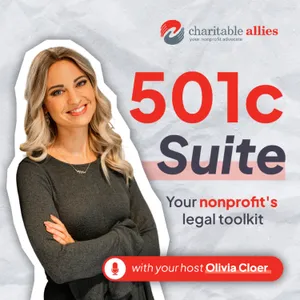
501c Suite is where charity meets clarity and law meets leadership. Hosted by Olivia Froedge, COO of Charitable Allies, the show empowers nonprofit founders and leaders with accessible legal insights, real-world stories, and strategic guidance. Learn how to protect your mission, stay compliant, and lead with confidence — without the legal jargon.
Latest Episodes
The most recent episodes — sign up to get AI-powered summaries of each one.
- 2 weeks ago24 min
EP 17. 2026 Group Exemption Updates: What Nonprofits Need to Know Before the January 2027 Deadline
The IRS has updated its rules for group exemptions, and if your nonprofit holds one, you have until January 22, 2027 to get compliant. That goes for denominations with local churches, national associations with chapters, and networks thinking about applying for the first time.In this episode of the 501c Suite podcast, Olivia Froedge talks with Robert Miller, Managing Attorney of Charitable Allies, about what changed, who it affects, and what to do before the deadline. They cover how the IRS now expects central organizations to oversee their members, the new filing requirements, and the $3,500 fee for new applications, all in plain, practical terms.Things You Will Learn:What a group exemption actually is, how it works, and which types of organizations typically use one.What existing group exemption holders must do differently under the new rules and what legacy protections they still have through grandfathering provisions.What it takes to file a brand new group exemption under the 2026 regulations, including the minimum requirements the IRS now mandates before they will even consider an application.Tools & Frameworks Covered:The Affiliation, Supervision, and Control Framework: The three-part structure the IRS now uses to evaluate whether a central organization is properly overseeing its subordinates, and why Robert recommends meeting all three even when only one is technically required.The Uniform Purpose Statement Requirement: A new standard for new group exemption filers that distinguishes a legal organizational purpose from a public-facing mission statement, and why getting this wrong at the document level creates downstream compliance problems.The Supplemental Group Ruling Information Form (SGRI): The formalized annual filing that replaces the old letterhead-based process for managing which organizations are on or off a group exemption letter, and why the shift to a standardized form matters for central organizations.#NonprofitLaw #NonprofitGovernance #501c3 #NonprofitCompliance #CharitableAllies✅ SUBSCRIBE so you never miss an episode:YouTube: https://www.youtube.com/@charitableallies/podcastsApple Podcast: https://podcasts.apple.com/us/podcast/501c-suite/id1854799490Spotify: https://open.spotify.com/show/18IVmECOQ1MMOOthGrSkRhWant more help with your nonprofit’s bylaws?Visit https://charitableallies.org/
- Sep 30, 202632 min
EP 16. Lessons From Building, Funding, and Leading a Successful Nonprofit
Many nonprofit founders begin with passion, a clear mission, and very little else. What separates the organizations that survive from the ones that struggle often comes down to the lessons learned along the way.In this episode, Olivia Froedge sits down with social impact strategist, nonprofit founder, and content creator Amber Melanie Smith to explore her journey from a college student volunteering across the country to launching and leading Activate Good, a nonprofit that mobilized thousands of volunteers in North Carolina.Together, they discuss the realities of startup funding, board leadership, founder burnout, delegation, and how nonprofit leaders can identify funding strategies that actually fit their mission. Amber also shares why understanding your personal mission can help you navigate leadership transitions and build impact that extends beyond any single organization.Things You Will Learn:How nonprofit founders can identify funding strategies that align with their mission, audience, and organizational strengths.Why delegation is one of the most important growth decisions a nonprofit leader can make.How spending time with the people you serve leads to stronger programs and more meaningful impact.Tools & Frameworks Covered:Finding Your Best Fit Funding Model: helps nonprofit leaders identify fundraising approaches that fit their organization, rather than chasing every revenue opportunity.Community Immersion Approach: helps founders design programs based on real needs rather than assumptions.Personal Mission Exercise: helps leaders maintain clarity and direction through growth, transition, and career changes.Zero to $100,000 Nonprofit Fundraising System#NonprofitLeadership #NonprofitStartup #FundraisingStrategy #SocialImpact #CharitableAllies✅ SUBSCRIBE so you never miss an episode:YouTube: https://www.youtube.com/@charitableallies/podcastsApple Podcast: https://podcasts.apple.com/us/podcast/501c-suite/id1854799490Spotify: https://open.spotify.com/show/18IVmECOQ1MMOOthGrSkRhWant more help with your nonprofit’s bylaws?Visit https://charitableallies.org/
- Sep 16, 202628 min
EP 15. Program Service Revenue 101: How Nonprofits Bring in Revenue Beyond Donations & Grants
Somewhere along the way, a myth took hold that nonprofits are not supposed to make money, and it is costing organizations real sustainability. The truth is that charging for services, goods, and even intellectual property is not only legal for nonprofits. It is often essential to mission longevity.In this episode of 501c Suite, Olivia Froedge is joined by Charitable Allies attorney Justin Fromke for a practical breakdown of program service revenue: what it is, what qualifies, where organizations tend to get tripped up, and when unrelated business income tax enters the picture.From thrift stores and adoption fees to licensing curriculum and renting out buildings, they walk through the most common scenarios nonprofit leaders face and explain what the IRS actually looks for when evaluating whether revenue is mission-aligned.If your organization has ever hesitated to charge for something it provides, this episode gives you the clarity to move forward with confidence.Things You Will Learn:What program service revenue actually is and why so many nonprofit leaders misunderstand what they are allowed to charge for.How to determine whether a revenue-generating activity is related enough to your mission to avoid triggering unrelated business income tax.What steps to take before licensing intellectual property, renting organizational assets, or offering services outside your core exempt purpose.Tools & Frameworks Covered:The Comparability Analysis: Evaluates what other nonprofits and for-profits charge for similar services so organizations can set rates that are reasonable, mission-aligned, and defensible to the IRS.The Related vs. Unrelated Revenue Test: A practical framework for assessing whether a revenue-generating activity furthers the organization's exempt purpose or risks triggering UBIT.The IP Licensing Agreement: A formal structure for nonprofits sharing curriculum, trademarks, or other intellectual property that protects ownership, limits unauthorized use, and guards against providing excess benefit to outside entities.#NonprofitLaw #501c3 #NonprofitGovernance #NonprofitLeadership #CharitableAllies✅ SUBSCRIBE so you never miss an episode:YouTube: https://www.youtube.com/@charitableallies/podcastsApple Podcast: https://podcasts.apple.com/us/podcast/501c-suite/id1854799490Spotify: https://open.spotify.com/show/18IVmECOQ1MMOOthGrSkRhWant more help with your nonprofit’s bylaws?Visit https://charitableallies.org/
- Jul 22, 202625 min
EP 14. How to Design Performance Reviews That Build Trust, Develop Staff, and Reduce Legal Risk
Performance reviews do not have to feel like a reckoning. And if they do, that is a signal that something broke long before the meeting ever started. When leaders treat reviews as isolated events rather than part of an ongoing feedback culture, employees are left guessing for months, and organizations absorb the consequences in morale, retention, and legal exposure.In this episode, Olivia Froedge of Charitable Allies walks nonprofit leaders through how to build a performance review process that actually serves the people in the room, covering review frequency at every stage of employment, how to structure goal-setting around objective and observable behaviors, what questions to ask and which ones to drop entirely, and how documentation from reviews can protect your organization when difficult employment decisions arise.Things You Will Learn:When to schedule performance reviews based on where an employee is in their tenure, and why defaulting to annual-only leaves critical gaps in communication and development.How to build review rubrics around measurable behaviors and outcomes so that feedback is grounded, fair, and harder to dispute.Which common review practices quietly undermine trust, and what to do instead to keep the conversation productive and legally sound.Tools & Frameworks Covered:The Job Description Standard: Anchors performance measurement to what the employee originally agreed to, keeping evaluations fair and defensible from the very first review.The Dual Submission Review Process: Has both the manager and employee complete the same rubric independently before meeting, then compares responses together to generate honest, unfiltered dialogue.The Behavioral Evidence Rule: Requires managers to bring specific, observable examples to every review rather than impressions or attitudes, keeping feedback actionable and protecting the organization from claims of favoritism or discrimination.#NonprofitLeadership #NonprofitHR #PerformanceManagement #NonprofitGovernance #CharitableAllies✅ SUBSCRIBE so you never miss an episode:YouTube: https://www.youtube.com/@charitableallies/podcastsApple Podcast: https://podcasts.apple.com/us/podcast/501c-suite/id1854799490Spotify: https://open.spotify.com/show/18IVmECOQ1MMOOthGrSkRhWant more help with your nonprofit’s bylaws?Visit https://charitableallies.org/
- Jun 24, 202619 min
EP 13. How to Build a Feedback Culture That Improves Performance and Reduces Risk in Nonprofits
Most nonprofit teams are not struggling because of bad intentions. They are struggling because no one is clearly saying what needs to be said. In this episode, Olivia Froedge of Charitable Allies explains why consistent, clear feedback is one of the most practical tools nonprofit leaders have to strengthen performance, reduce confusion, and protect their organization from unnecessary risk.Through real examples and a simple, repeatable framework, she shows how to give both positive and corrective feedback without creating fear, why avoiding feedback actually damages trust, and how building this habit removes surprises from performance reviews. If you lead people, this episode will help you communicate in a way that supports your team and your mission at the same time.Things You Will Learn:Why avoiding feedback creates uncertainty and weakens team performance over time.How to give feedback that is direct, useful, and focused on behavior rather than personality.How consistent feedback reduces legal risk and prevents breakdowns during performance reviews.Tools & Frameworks Covered:Ask Permission - Describe Behavior - Describe Impact - Give Feedback: it helps leaders deliver feedback that is clear, grounded, and actionable.No-Surprise Review Principle: ensures performance reviews reflect ongoing conversations.Feedback Frequency Tracking: helps managers build consistency and avoid long gaps without communication.Helpful ResourcesThe Effective Manager Book#NonprofitLeadership #NonprofitManagement #EmployeeFeedback #TeamPerformance #CharitableAllies✅ SUBSCRIBE so you never miss an episode:YouTube: https://www.youtube.com/@charitableallies/podcastsApple Podcast: https://podcasts.apple.com/us/podcast/501c-suite/id1854799490Spotify: https://open.spotify.com/show/18IVmECOQ1MMOOthGrSkRhWant more help with your nonprofit’s bylaws?Visit https://charitableallies.org/
- Jun 10, 202624 min
EP 12. Nonprofit Risk Management: How to Protect Your Mission, People, and Programs
Most nonprofit leaders do not realize how vulnerable their organization is until one preventable incident puts the entire mission at risk. In this episode of 501c Suite, Olivia Froedge talks with Quentin Collins, Director of Volunteer Operations at Trout Unlimited, about how nonprofit leaders can think more clearly and proactively about risk management before something goes wrong.Using real examples from youth camps, volunteer-led programs, and outdoor events, they break down how to identify risk through population, activity, and location, how practical safeguards, waivers, and insurance work together, and why strong preparation protects not just participants, but also staff, volunteers, and the future of the organization.Things You Will Learn:How to identify nonprofit risk by evaluating the population you serve, the activities you run, and the locations where they happen.Practical steps that make nonprofit programs safer, including training, waivers, and insurance working together.How to make better leadership decisions by weighing both the likelihood and the consequences of a risk.Tools & Frameworks Covered:PAL Framework (Population, Activity, Location): helps nonprofit leaders identify where risk is most likely to show up inside programs and events.Three-Layer Risk Prevention Stack: helps organizations reduce exposure through practical risk management, legally sound waivers, and insurance.Likelihood vs. Consequence Risk Matrix: helps leaders decide which risks are acceptable, which need mitigation, and which should be avoided entirely.Helpful ResourcesPreventing Liability and Risk for Nonprofit LeadersTrout Unlimited: Volunteer with TU#NonprofitLaw #NonprofitLeadership #501c3 #NonprofitRiskManagement #CharitableAllies✅ SUBSCRIBE so you never miss an episode:YouTube: https://www.youtube.com/@charitableallies/podcastsApple Podcast: https://podcasts.apple.com/us/podcast/501c-suite/id1854799490Spotify: https://open.spotify.com/show/18IVmECOQ1MMOOthGrSkRhWant more help with your nonprofit’s bylaws?Visit https://charitableallies.org/
- May 27, 202623 min
EP 11. How Fiscal Sponsorship Lets You Raise Grants and Donations Before You Have 501(c)(3) Status
Most founders assume they need 501(c)(3) status before they can raise a single grant dollar. But there is a legal pathway that changes everything. Fiscal sponsorship allows mission-driven organizations to accept tax-deductible donations and apply for grants, long before completing the IRS process, and understanding how it works can save emerging nonprofits months of lost momentum.In this episode, host Olivia Froedge sits down with Gavin Funkhouser, Program Manager, Sponsorship Allies (FSA), to demystify the world of fiscal sponsorship from the inside out. Together, they break down the two primary models - Model A and Model C - exploring how each affects autonomy, fees, and day-to-day operations, and walk through real examples of who fiscal sponsorship is actually for, including seasonal charities, for-profit companies with charitable arms, and community startups that need a running start.Things You Will Learn:How fiscal sponsorship works as a legal bridge for organizations not yet holding 501(c)(3) status, and why it is not just for startups.The key differences between Model A and Model C fiscal sponsorship, including how fees, autonomy, and administrative support vary between them.How to evaluate and choose a fiscal sponsor, including what questions to ask about IP ownership, fundraising minimums, and grant compatibility.Tools & Frameworks Covered:Model A vs. Model C Framework: helps organizations understand the trade-offs between full administrative integration and independent charitable operations when choosing a fiscal sponsor.Fee Percentage Analysis: helps nonprofits calculate the real cost of fiscal sponsorship against grant income, comparing sponsor rates (typically 4–15%) to determine financial fit before signing an agreement.Fiscal Sponsorship Agreement Review: helps organizations protect their programs and intellectual property by understanding the ownership, autonomy, and exit provisions written into their sponsorship contract before signing.Helpful ResourcesCharitable Allies: Fiscal Sponsorship OverviewFiscal Sponsorship Allies (FSA)#NonprofitLaw #FiscalSponsorship #501c3 #NonprofitLeadership #CharitableAllies✅ SUBSCRIBE so you never miss an episode:YouTube: https://www.youtube.com/@charitableallies/podcastsApple Podcast: https://podcasts.apple.com/us/podcast/501c-suite/id1854799490Spotify: https://open.spotify.com/show/18IVmECOQ1MMOOthGrSkRhWant more help with your nonprofit’s bylaws?Visit https://charitableallies.org/
- May 13, 202629 min
EP 10. How Nonprofits Can Know When It’s Time to Hire Their First Employee
Hiring too early can strain a nonprofit, but waiting too long can stall the mission. In this episode, host Olivia Froedge breaks down how nonprofits can tell when it’s truly time to hire their first employee. She explains the three key factors to evaluate before making the leap: work, money, and support, then walks through what hiring actually looks like in practice, from compensation research and payroll realities to board approval and compliance setup.Things You Will Learn:How to tell whether your nonprofit needs more volunteers or its first employee.How to calculate the real cost of hiring beyond base salary.How to prepare your nonprofit legally and operationally for its first hire.Tools & Frameworks Covered:Work, Money, Support framework: helps determine if your nonprofit is truly ready to hireComparable compensation research: helps set fair, realistic pay for nonprofit rolesPEO and payroll software options: help nonprofits manage payroll, taxes, and HR setup more confidently👉 Can I make my nonprofit my full-time job? - https://charitableallies.org/can-i-make-my-nonprofit-my-full-time-job/#NonprofitLaw #NonprofitLeadership #501c3 #NonprofitHiring #CharitableAllies✅ SUBSCRIBE so you never miss an episode:YouTube: https://www.youtube.com/@charitableallies/podcastsApple Podcast: https://podcasts.apple.com/us/podcast/501c-suite/id1854799490Spotify: https://open.spotify.com/show/18IVmECOQ1MMOOthGrSkRhWant more help with your nonprofit’s bylaws?Visit https://charitableallies.org/
Get 501c Suite summaries in your inbox
Free AI-powered daily recaps. Key takeaways, quotes, and mentions — in a 5-minute read.
Get Free Summaries →Free forever for up to 3 podcasts. No credit card required.
You Might Also Like
Podcasts in similar categories.

Coffeez with Joe Shalaby
Conversations with entrepreneurs, investors, and cultural figures reveal the real strategies, struggles, and costs behind success.

All-In with Chamath, Jason, Sacks & Friedberg
Four tech investors discuss technology, markets, politics, and poker with candid, in-depth analysis.

Unblinded with Sean Callagy
A legally blind entrepreneur shares insights on ethical influence, peak performance, and mastering hidden patterns in business and life.

The Code To Winning
Interviews with business leaders, entrepreneurs, and CEOs reveal strategies and insights for success in the modern business world.

Planet Money
Explains how economic forces influence everyday life and global events through storytelling and deep dives into surprising topics.

The Room Podcast
Tech founders and funders share behind-the-scenes stories from pivotal moments in their careers.

Prof G Markets
Daily market news and analysis on earnings, geopolitics, Big Tech, and AI with clear, no-jargon insights.

The Level Up Podcast w/ Paul Alex
A former detective shares real stories and practical strategies on building passive income, financial freedom, and entrepreneurial success.
About 501c Suite
501c Suite is where charity meets clarity and law meets leadership. Hosted by Olivia Froedge, COO of Charitable Allies, the show empowers nonprofit founders and leaders with accessible legal insights, real-world stories, and strategic guidance. Learn how to protect your mission, stay compliant, and lead with confidence — without the legal jargon.
Customized Recaps
AI-powered recaps with compact key takeaways, quotes, and insights.
Straight to Your Inbox
Get key takeaways from 501c Suite in a 5-minute read.
Save Hours Every Week
Stay current on your favorite podcasts without falling behind.
Frequently Asked Questions
What is Podzilla's 501c Suite daily summary?
It's a free AI-powered email that summarizes new episodes of 501c Suite as soon as they're published. You get the key takeaways, notable quotes, and links & mentions — all in a quick read.
How does the 501c Suite podcast summary work?
When a new episode drops, our AI transcribes and analyzes it, then generates a personalized summary tailored to your interests and profession. It's delivered to your inbox every morning.
Is this an official 501c Suite product?
No. Podzilla is an independent service that summarizes publicly available podcast content. We're not affiliated with or endorsed by Charitable Allies.
Can I get summaries of other podcasts too?
Absolutely! The free plan covers up to 3 podcasts, any in the catalog. Basic raises that to 15, Pro to 40 and Max to 100. Browse our full catalog at /podcasts.
How often does 501c Suite release new episodes?
501c Suite publishes biweekly. Our AI generates a summary within hours of each new episode.
What topics does 501c Suite cover?
501c Suite covers topics including Business, Non-Profit. Our AI identifies the specific themes in each episode and highlights what matters most to you.
Start getting 501c Suite summaries tomorrow morning.
Free forever for up to 3 podcasts. No credit card required.
Free forever for up to 3 podcasts. No credit card required.