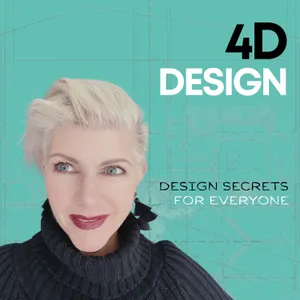
Free Daily Podcast Summary
4D Design: Daily Summaries Delivered
by Andrea Keller
4D Design Podcast explores how Architecture + Design can control our perceptions, our behaviors, and our health. Are you interested in how Design works but don’t know how where to start? We will explain all of the tricks we learn in architecture school, and how to read and use the visual language of Design.Andrea Keller (AK) has been a licensed architect for more than 20 years and has taught architectural history, theory and design at USC School of Architecture and Otis. She is an expert in Sacred Geometry and is creating new architecture based on the geometry of music. She believes that everyone should be able to use design in order to be healthier, stronger and more successful.Episodes include Architectural Explainers, Case Studies, History, Theory, and Q&As with AK.
Latest Episodes
The most recent episodes — sign up to get AI-powered summaries of each one.
- Sep 22, 202623 min
S2 EP 6: Buildings Have Skin, Too! - Thresholds and Skin
A building is an organism, and it meets our own organism first at the skin. In this episode I start mapping buildings onto the human body, system by system, beginning with skin. Human skin forms from the same embryonic layer as the brain and spinal cord, which makes it a sensing organ wired straight into the nervous system. It reads temperature, pressure, texture, and threat before we ever think about it. A building's skin does the same work. It protects us, regulates temperature, and shapes how we feel before we even walk through the door. I explore thermal mass, shade, and covered entries; why sudden transitions (think the sidewalk into a big-box store) stress the nervous system; and how architecture once honored the threshold through porches, foyers, entry gardens, mudrooms, and ceremonial procession. We also look at the roots of the word threshold, the Latin limen, and the words that grew from it, like subliminal. From there: consent and the building envelope, zones within the home, window seats and secret rooms, and whether a space adds to you, subtracts from you, multiplies you, or divides you. A building's skin isn't just a wall. It's where we meet the world.
- Sep 10, 202612 min
S2 EP 5: New Series! Mapping Architecture to the Human Body...Hello, YouTube!
Welcome to a new season, a new series, and — for the first time — video on YouTube. I'm kicking off a new multi-episode arc where I map every system in a house directly onto your own body: structure onto skeleton, plumbing onto digestion, electrical onto our nervous system, ventilation onto respiration. Every physical system in a building has a physical effect on you — some immediate and neurological (sound, light, color temperature), some slower and chemical (off-gassing, endocrine disruption), some psychological (thresholds, liminal spaces, the basement as subconscious). I also share the personal story behind this work: twenty years as a hospitality designer trained to control mood and emotion through space, followed by an unexpected stretch as a hospital patient — where I saw firsthand how far healthcare design still is from anything resembling healing. That contrast is the origin point for everything this season explores. Next episode: building structure, and what actually holds a house up — mapped onto your own skeletal system.
- Mar 8, 202640 min
S2 EP 4: Death By Drywall
DEATH BY DRYWALL Season 2, Episode 4 A podcast about architecture, materials, and the buildings we actually live inside. Episode Summary Drywall is everywhere. It's in almost every wall of every home built in America in the last 60 years. But how did it get there — and is it actually the best we can do? This episode traces the full arc of drywall's history: from the pre-industrial craft of lath and plaster, through the wartime shortcuts that gave rise to gypsum board, to the environmental and health questions we're only now starting to take seriously. We also look at traditional wall systems from Japan — built from bamboo, rope, earthen plaster, and lime — that outperform modern drywall on almost every meaningful measure. And we close with a bigger question: why do we accept a lower standard of quality in our walls than we do in almost every other part of our lives? What We Cover • The ancient techniques drywall replaced and why they were better in many ways • Japanese tsuchikabe wall systems: bamboo lattice, rice-straw rope, earthen plaster, and lime finish / walls that breathe, flex, and last centuries • Augustine Sackett's 1894 invention and how U.S. Gypsum turned it into the default building material • The four forces that drove drywall adoption: wartime labor shortages, mass housing demand, industrial standardization, and fire-resistance marketing • What drywall is actually made of: calcined gypsum, paper facing, starch binders, foaming agents, biocides, and chemical modifiers • Why drywall fails: moisture absorption, mold, fragility, poor acoustics, and limited lifespan • The environmental profile of gypsum board production: energy use, landfill waste, and hydrogen sulfide off-gassing • Alternatives gaining traction: rammed earth, compressed earth block, lime plaster,
- Oct 9, 202521 min
S2 EP 3: MOLD - Building Biology + How We Build: Building Codes, What Went Wrong, and How To Fix! Building for a Healthy Life
Today we dive into the world of how we build and why. And why are we all getting so sick? It's time to look at our building envelope the same way we look at food labels - we are being poisoned while we work and sleep. This is a re-presentation of a talk given at CIRSx in Phoenix / Tempe in June 2025. Original Slides Here: https://www.dropbox.com/scl/fi/j7zhgh0q4ctkkwormt3mf/CIRSX_Magis.pdf?rlkey=kfdoki5xbu8gga5g8gyjwjaok&dl=0
- Jun 22, 202535 min
S2 EP 2: The Future is Fractal - Neurobiology and the Future of Design
Powerpoint Lecture - The Future is Fractal (SLIDES) https://www.dropbox.com/scl/fi/6r0gh59jfcxpwah7njmyv/CEU1_THE-FUTURE-IS-FRACTAL_Star-Tile-ICFF.pdf?rlkey=4t74xey38eu1nzh3c7ep6p7hy&st=a5nzagd0&dl=0 https://www.interaliamag.org/articles/fractal-patterns-in-nature-and-art-are-aesthetically-pleasing-and-stress-reducing/ https://www.unmpress.com/9780826352026/fractal-architecture/ African Fractals https://www.rutgersuniversitypress.org/african-fractals/9780813526140/ Gothic Fractals https://churchheritage.eu/science/why-gothic-cathedrals-are-so-fascinating-is-all-about-math/ https://link.springer.com/article/10.1007/s00004-014-0187-7 Frank Lloyd Wright and Fractals http://webdoc.sub.gwdg.de/EMIS/journals/NNJ/98/Eaton.html Gaudi and Fractals https://parametric-architecture.com/gaudi-architecture-science/?srsltid=AfmBOooFTADY9NfoTl9u6D50WYu-7lSlXkY3eFczMcTGHdojT5TqSfke 13:9 Group - Modern Fractal Designs https://www.13and9design.com/design/fractal-fluency-collection/ 13&9 Design https://www.13and9design.com › design › fractal-library Dr. Richard Taylor - The Physics of Fractals https://authenticationinart.org/pdf/literature/Taylor-Richard-A-fascination-with-fractals-In-Physicsworld-September-2013.pdf https://blogs.uoregon.edu/richardtaylor/ Science In Design - Certification Course https://scienceindesign.com/ Bob Browning / Terrapin https://www.terrapinbrightgreen.com/wp-content/uploads/2014/09/14-Patterns-of-Biophilic-Design-Terrapin-2014p.pdf https://www.terrapinbrightgreen.com/report/biophilic-design/ AK links: Four D Design - Organic Architecture www.fourddesign.com Star Tile - Fractal Ceramics www.star-tile.com Star Tile Studio - Joshua Tree, CA https://g.co/kgs/DUMmCLh Contact: ak@fourddesign.com
- Apr 8, 202540 min
S2 EP 1: Ornament, Meaning and Modernism
EPISODE 25 - ORNAMENT Ornament has always had an important meta function within the human psyche. It has been "outlawed" for the past 100 years. RESOURCE LINKS https://www.gadarchitecture.com/en/ornament-in-architecture https://www.artforum.com/features/louis-sullivans-ornament-209337/ https://journals.sagepub.com/doi/abs/10.1177/1354067x13515937?journalCode=capa https://medium.com/the-thinking-of-design/ornament-as-an-abstraction-of-society-853bb29cdf08 https://www.youtube.com/watch?v=5PmydPmwrKA https://dreamswork.co.uk/portfolio/how-ornament-is-functional/ https://designmanifestos.org/adolf-loos-ornament-and-crime/ AK links: Four D Design - Organic Architecture, Geometry of Nature www.fourddesign.com Star Tile - Multidimensional Ceramics www.star-tile.com Star Tile Studio - Joshua Tree, CA https://g.co/kgs/DUMmCLh Contact: ak@fourddesign.com WHY DO WE USE ORNAMENT? - SIGNIFIER Social signaling - and this changes over time! Example tattoos - British nobility 1900-1920 Historically it was the demarcation of class and status - governments had rules about what colors and types of clothing could be worn, so that people could never be socially mobile- Ornament on clothing has always been important for the military and in battle, people wore family crests / telling others who they were The same went for houses - all ornament had meaning that could be learned (this is western) Heraldry WHY DO WE USE ORNAMENT? - SOCIAL & PSYCHOLOGICAL Belonging is so important that people will go into debt to buy clothing that lets them fit into a social group, or a car, or jewelry etc - people are wildly craving belonging, and ornament is a way to show your tribe. OTHER REASONS: Repetition causes peace - relaxation of the nervous system By creating the ornament, the maker can embody the energy of the thing that might be feared Establish historic continuity - memory, legacy. Spiritual Side of Ornament - Adornment, Defense, Totems, Enhancing Consciousness. META FUNCTION, embodied practice Adorning parts of us that are vulnerable - defensive and actively stating who we are / calling in our gui
- Sep 28, 202440 min
Ep 24: How to Buy Paint
EPISODE 24 - HOW TO BUY PAINT Take ALL the Paint Chips! Do not be shy - take them all and I mean all of them Paint Decks - Good option if you're serious about color Paint Brands - what is available in your area? https://www.lifestoryresearch.com/2024-best-paint-ranking-review Sheen - This is a huge decision. When in doubt choose Matte https://www.houselogic.com/remodel/painting-lighting/paint-sheen-guide/ SAMPLES - Actual Paint and Stickers / Visualization https://samplize.com https://store.benjaminmoore.com/storefront/us/en/color-samples/samplize/peel-and-stick-paint-sample Refinement - YOU HAVE TO DO THIS / DON'T GO FAST Stomach vs mind - immediate decisions vs emotional / somatic decisions AK links: Four D Design - Holistic Design www.fourddesign.com Star Tile - Multidimensional Ceramics www.star-tile.com Star Tile Studio - Joshua Tree, CA https://g.co/kgs/DUMmCLh
- Aug 20, 202424 min
Ep 23: All About Paint
An assortment of resources / stories about Paint. https://www.earthdate.org/episodes/the-colorful-history-of-paint History of Pigments - they all have a specific time period Can look at the history of art through pigments Basically people always paint if they can! https://www.webexhibits.org/pigments/intro/history.html#google_vignette Things not always good for you! (or even will kill you or destroy your internal organs: Lead White https://zotapro.com/blog/lead-paint-history/ https://www.paint.org/about/industry/history/ Pigments are Organic or Inorganic - and now we have Synthetics. https://burnaway.org/magazine/a-history-of-paint-part-one/ https://www.greenbuildermedia.com/blog/a-deep-dive-into-non-toxic-paints-and-vocs https://www.roepaint.com/everything-need-know-alkyd-paint/ https://www.greenmatch.co.uk/blog/is-paint-bad-for-the-environment https://www.earthpigments.com/natural-earth-ocher-pigments/?gad_source=1&gclid=CjwKCAjw_ZC2BhAQEiwAXSgClnbwPlFU_PivAwZXUEDpoKvJxwIMjW9w6zgntUXe2LKt-iLlpmfBNxoCgsQQAvD_BwE AK links: Four D Design - Holistic Design www.fourddesign.com Star Tile - Multidimensional Ceramics www.star-tile.com Star Tile Studio - Joshua Tree, CA https://g.co/kgs/DUMmCLh Email Me: ak@fourddesign.com
Get 4D Design summaries in your inbox
Free AI-powered daily recaps. Key takeaways, quotes, and mentions — in a 5-minute read.
Get Free Summaries →Free forever for up to 3 podcasts. No credit card required.
You Might Also Like
Listeners also like.

The Second Studio Design and Architecture Show
Architects discuss design, architecture, and everyday life with creative professionals in unscripted conversations.
Design Create Inspire
Study tips, exam strategies, and career advice for architects preparing for the ARE 5.0 and licensure.
The iDesign Lab Podcast
Explores how intentional design in business, culture, and creativity shapes human behavior, industries, and the way we live.

Design Matters with Debbie Millman
Creative people discuss how they shape their lives and careers through design, art, and personal philosophy.

Dear Alice | Interior Design
Two interior designers explore high-end home decor and lifestyle trends with wit and sophistication.

Thrive In Design
Thrive In Design

Kathleen Can Do It: DIY, Home Decor, and Interior Design
Kathleen Can Do It: DIY and Design

The Honest Designers Show
A candid look at building a successful creative career, covering client work, personal style, branding, and fulfillment in design.
Two Designers & A Builder Walk Into A Bar
2d1bbar

Business of Home Podcast
Dennis Scully interviews design industry leaders about the business and challenges of interior design.

GSAPP Conversations
Columbia Graduate School of Architecture, Planning and Preservation

School of Motion Podcast
Interviews with motion designers, animators, and 3D artists exploring creativity, software techniques, and the business of design.
About 4D Design
4D Design Podcast explores how Architecture + Design can control our perceptions, our behaviors, and our health. Are you interested in how Design works but don’t know how where to start? We will explain all of the tricks we learn in architecture school, and how to read and use the visual language of Design.Andrea Keller (AK) has been a licensed architect for more than 20 years and has taught architectural history, theory and design at USC School of Architecture and Otis. She is an expert in Sacred Geometry and is creating new architecture based on the geometry of music. She believes that everyone should be able to use design in order to be healthier, stronger and more successful.Episodes include Architectural Explainers, Case Studies, History, Theory, and Q&As with AK.
Customized Recaps
AI-powered recaps with compact key takeaways, quotes, and insights.
Straight to Your Inbox
Get key takeaways from 4D Design in a 5-minute read.
Save Hours Every Week
Stay current on your favorite podcasts without falling behind.
Frequently Asked Questions
What is Podzilla's 4D Design daily summary?
It's a free AI-powered email that summarizes new episodes of 4D Design as soon as they're published. You get the key takeaways, notable quotes, and links & mentions — all in a quick read.
How does the 4D Design podcast summary work?
When a new episode drops, our AI transcribes and analyzes it, then generates a personalized summary tailored to your interests and profession. It's delivered to your inbox every morning.
Is this an official 4D Design product?
No. Podzilla is an independent service that summarizes publicly available podcast content. We're not affiliated with or endorsed by Andrea Keller.
Can I get summaries of other podcasts too?
Absolutely! The free plan covers up to 3 podcasts, any in the catalog. Basic raises that to 15, Pro to 40 and Max to 100. Browse our full catalog at /podcasts.
How often does 4D Design release new episodes?
4D Design publishes biweekly. Our AI generates a summary within hours of each new episode.
What topics does 4D Design cover?
4D Design covers topics including Arts, Design, Culture, Society & Culture. Our AI identifies the specific themes in each episode and highlights what matters most to you.
Start getting 4D Design summaries tomorrow morning.
Free forever for up to 3 podcasts. No credit card required.
Free forever for up to 3 podcasts. No credit card required.