Free Daily Podcast Summary
35 West: Daily Summaries Delivered
by Center for Strategic and International Studies
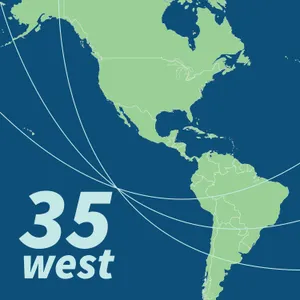
The CSIS Americas Program podcast looks at the politics and policies of the 35 countries in the Western Hemisphere. It especially focuses on U.S. engagement with the region, whether on trade, diplomacy, or security issues like drugs and terrorism. Guests include top policymakers from the U.S. and other countries.
Latest Episodes
The most recent episodes — sign up to get AI-powered summaries of each one.
- 5 days ago18 min
Understanding Canada’s New National Security Plan
For the first time in two decades, Canada has released a new national security plan, setting out its priorities at a pivotal moment of geopolitical change and a shifting world order. As Prime Minister Mark Carney seeks to diversify Canada’s international partnerships, strengthen domestic industries, navigate mounting pressure from the United States, and build a new alliance of middle powers, the plan signals a potential shift in how Canada approaches its security, and its role on the global stage, while reiterating its commitment to North American defense. To help unpack what the plan means, why it's being issued now, and its relevance for the United States, Americas Program Acting Director and Senior Fellow Christopher Hernandez-Roy is joined by Vincent Rigby, Americas Program Senior Adviser and Canada’s former National Security and Intelligence Advisor to the Prime Minister (2020–2021).
- 6 days ago21 min
Lula Wins: What Comes Next for Brazil?
In a stunning upset, Luiz Inácio “Lula” da Silva has won the Brazilian presidential election, defeating presumed frontrunner Flávio Bolsonaro, bucking a recent right-ward shift in presidential elections in Latin America. The win marks a historic fourth presidency for Lula, who now faces a difficult domestic political landscape and a complex relationship with the United States. To unpack these developments, Americas Program Acting Director and Senior Fellow Christopher Hernandez-Roy sits down with Americas Program Senior Associate Thiago de Aragão. Together they explore the factors behind Lula’s unexpected victory, the key challenges confronting his administration, and what Brazil and the wider region can expect from his fourth term in office.
- 1 weeks ago29 min
Dragon in the Americas with Leland Lazarus
As great power competition between China and the United States intensifies, Latin America has emerged as a critical arena. Yet, discourse surrounding China’s expanding presence often falls into two reductive narratives, portraying Beijing as either a strategic “threat” or a benevolent “White Knight.” In reality, China’s regional strategy is multifaceted, spanning strategic investments in ports and digital infrastructure, access to critical minerals, and expanding security partnerships. To explore these dynamics, Henry Ziemer sits down with Leland Lazarus, founder and CEO of Lazarus Consulting, and author of Dragon in the Americas: China’s Power, Presence, and Regional Influence. Together, they examine China’s evolving approach to Latin America, the competition between China and Taiwan for influence, the role of illicit economies, and the broader implications of Beijing’s growing regional presence.
- 2 weeks ago24 min
Battle for Brazil: The First-Round Election Results Explained
On October 4, Brazilians cast their votes in what is shaping up to be one of the most contentious and polarized elections in recent history. Flávio Bolsonaro, the right-wing senator and son of former President Jair Bolsonaro, finished ahead of incumbent President Luiz Inácio Lula da Silva, securing 47 percent of the vote to Lula’s 45 percent. As the two candidates prepare for a runoff on October 25, corruption scandals, economic pressures, and competing policy visions are shaping the campaign. Meanwhile, conservative gains in Congress have reshaped the broader Brazilian political landscape, raising questions about how either candidate would govern and build legislative support. To unpack these developments, Henry Ziemer sits down with Pedro Siemsen Giestas, a research analyst at Greenmantle and editor of Pindograma. Together they examine the factors behind Bolsonaro’s strong first-round performance, the political fallout from corruption allegations, and the issues and strategies likely to shape the final stretch of the campaign.
- Oct 1, 202631 min
Paraguay’s Moment: A New Chapter for Development
Paraguay is often overlooked in South America, but it is beginning to occupy a more visible place in regional economic and geopolitical conversations. With a growing economy, clean energy resources, and longstanding diplomatic ties with Taiwan, the country is trying to position itself for a new stage of development—one that goes beyond commodities and turns growth into broader opportunities for Paraguayans. In this episode of 35 West, Associate Director Juliana Rubio sits down with Esteban Caballero, a political scientist and researcher at FLACSO Paraguay, to discuss Paraguay’s economic trajectory, the structural challenges that still shape its development, and the role international partners can play. They also examine how Paraguay’s relationship with Taiwan fits into a wider geopolitical context involving the United States and China.
- Sep 24, 202623 min
The Future of U.S. Development Finance in the Americas
As the United States places renewed emphasis on the Western Hemisphere, development finance is emerging as an important instrument of economic statecraft. Following Congress’s 2025 reauthorization and revitalization of the U.S. International Development Finance Corporation (DFC), the agency is positioned to play an expanded role in mobilizing private capital, strengthening economic partnerships, and supporting strategic investments across the region. In this episode, Caroline Vik, Chief Policy Officer at the DFC, discusses the agency's evolving mission, investment opportunities across the Western Hemisphere, and the challenges shaping economic development and growth throughout the region.
- Sep 17, 202625 min
An Update on U.S.-Mexico Firearms Trafficking
In February 2025, the State Department designated six Mexican cartels as foreign terrorist organizations (FTOs) as part of a broader push from the Trump administration taking aim at organized crime in the Western Hemisphere. While U.S. rhetoric has continually stressed the threat posed by Mexican cartels, an overlooked component in this narrative is the fact that U.S. guns comprise the overwhelming majority of cartel arsenals. Still, the use of FTO designations opens new avenues for prosecuting firearms traffickers, most notably through the use of material support for terrorism charges. In this episode, Henry Ziemer sits down with Jake Steisel, Senior Staff Attorney at Global Action on Gun Violence. Together, they analyze trends in U.S. firearms trafficking dynamics, as well as the legal implications of recent FTO designations and recent indictments of suspected gun traffickers. They also discuss the steps the United States and Mexico can take together to curb the supply of weapons to cartels.
- Sep 10, 202635 min
Will Trump’s Pressure on Canada Break the USMCA?
When faced with President Trump’s economic pressure, most U.S. allies have fallen into line. Canada bucked the trend and stood firm. This week, Chris Hernandez-Roy and Diego Marroquin Bitar are joined by State of Play host, Will Todman, to discuss if Canada can withstand U.S. pressure, what lies ahead, and what U.S.-Canada tensions mean for the future of free trade in North America. Christopher Gundermann, Hugh Grant-Chapman, and Diego Marroquín Bitar, "Understanding President Trump’s New Tariffs on Canadian Imports," CSIS, July 21, 2026. Diego Marroquín Bitar and Juan Carlos Baker Pineda, "Inside the Mechanics of the 2026 USMCA Review," CSIS, October 27, 2025. Diego Marroquin Bitar, Christopher Hernandez-Roy, and Earl Anthony Wayne, "USMCA Review 2026," CSIS, August 18, 2025.
Get 35 West summaries in your inbox
Free AI-powered daily recaps. Key takeaways, quotes, and mentions — in a 5-minute read.
Get Free Summaries →Free forever for up to 3 podcasts. No credit card required.
You Might Also Like
Listeners also like.
Mexico Matters
Examines key developments in Mexico and how they affect the United States.

State of Play
Geopolitical analysis with CSIS experts on shifting global power and international relations.
Southeast Asia Radio
Discusses Southeast Asian geopolitics, post-pandemic recovery, democracy, and human rights through expert interviews and regional analysis.

Americast
BBC journalists analyze U.S. politics, focusing on the Trump administration and social media's influence on American voters.
Into Africa
Examines cultural, political, and economic developments in Africa through interviews with experts and leaders across the continent.

Pod Save the World
A former White House official and a political commentator analyze key foreign policy and global events each week.

Latino USA
Explores Latino stories and their cultural, social, and political impact in the U.S. and beyond.

The Trade Guys
Trade experts analyze global trade issues, policies, and their real-world impacts on businesses and consumers.

Betting on America: Winning the Global Tech Race
Examines U.S. government-business partnerships driving innovation in critical technologies like AI, semiconductors, and climate tech.
The Just Security Podcast
Expert analysis of national security, foreign policy, and rights from practitioners, academics, and affected individuals.
The Truth of the Matter
Breaks down complex global policy issues through informed, balanced discussions without spin or sensationalism.
Global Security Briefing
Expert analysis on global security issues, focusing on UK foreign and defense policy in a changing international landscape.
About 35 West
The CSIS Americas Program podcast looks at the politics and policies of the 35 countries in the Western Hemisphere. It especially focuses on U.S. engagement with the region, whether on trade, diplomacy, or security issues like drugs and terrorism. Guests include top policymakers from the U.S. and other countries.
Customized Recaps
AI-powered recaps with compact key takeaways, quotes, and insights.
Straight to Your Inbox
Get key takeaways from 35 West in a 5-minute read.
Save Hours Every Week
Stay current on your favorite podcasts without falling behind.
Frequently Asked Questions
What is Podzilla's 35 West daily summary?
It's a free AI-powered email that summarizes new episodes of 35 West as soon as they're published. You get the key takeaways, notable quotes, and links & mentions — all in a quick read.
How does the 35 West podcast summary work?
When a new episode drops, our AI transcribes and analyzes it, then generates a personalized summary tailored to your interests and profession. It's delivered to your inbox every morning.
Is this an official 35 West product?
No. Podzilla is an independent service that summarizes publicly available podcast content. We're not affiliated with or endorsed by Center for Strategic and International Studies.
Can I get summaries of other podcasts too?
Absolutely! The free plan covers up to 3 podcasts, any in the catalog. Basic raises that to 15, Pro to 40 and Max to 100. Browse our full catalog at /podcasts.
How often does 35 West release new episodes?
35 West publishes biweekly. Our AI generates a summary within hours of each new episode.
What topics does 35 West cover?
35 West covers topics including News, Education, Government. Our AI identifies the specific themes in each episode and highlights what matters most to you.
Start getting 35 West summaries tomorrow morning.
Free forever for up to 3 podcasts. No credit card required.
Free forever for up to 3 podcasts. No credit card required.