Free Daily Podcast Summary
2pac Murder Files Unsealed: Daily Summaries Delivered
by AC Wilson
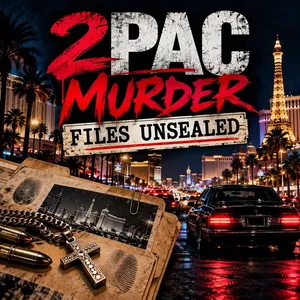
On September 7, 1996, hip-hop icon Tupac Shakur—known worldwide as 2Pac—was shot in Las Vegas following a night that would become one of the most scrutinized moments in music and true-crime history. He died six days later at just 25 years old. 2Pac Murder Files Unsealed takes a deep dive into the murder of Tupac Shakur and the investigation that followed. From the events leading up to the Las Vegas shooting and the evidence gathered by investigators to witness accounts, competing theories, law-enforcement decisions, suspects, arrests, courtroom proceedings, and unanswered questions, each episode examines another piece of this decades-spanning case. Using publicly available records, court proceedings, historical reporting, interviews, and documented sources, the series separates established facts from allegations and speculation while exploring how one of the most famous unsolved murders in American popular culture developed into a major criminal prosecution decades later.<
Latest Episodes
The most recent episodes — sign up to get AI-powered summaries of each one.
- Yesterday38 min
The Tupac Tapes With Angie Martinez - Netflix Releases November 27th
Netflix is launching a four-part video podcast titled The Tupac Tapes with Angie Martinez on November 27, 2026. The series features unreleased 1996 interview footage recorded in Los Angeles just months before Tupac Shakur's tragic murder. Host Angie Martinez originally withheld the explosive audio for nearly three decades to prevent fueling dangerous coastal tensions and to protect the people involved. The program blends archival tape with modern roundtable discussions featuring hip-hop icons and journalists to analyze the rapper's legacy. Ultimately, the project aims to present a nuanced human portrait of Tupac beyond his public persona, showcasing his underlying vulnerabilities and frustrations.This episode includes AI-generated content.
- 2 days ago36 min
Why Angie Martinez Hides Her Tupac Interview
Radio personality Angie Martinez has explained why she continues to withhold a lengthy, unreleased Tupac Shakur interview recorded in 1996. While only a small portion of the conversation aired initially, the full recording spans nearly two hours and features the rapper angrily criticizing various figures in the industry. Martinez chose to suppress the tapes to prevent escalating the dangerous East Coast versus West Coast feud happening at the time. Years later, she remains proud of her protective instincts, noting that the footage could have caused real harm. Additionally, she acknowledges that the conversation lacks the polish of a seasoned journalist, reflecting her own relative inexperience as a young broadcaster back then.This episode includes AI-generated content.
- 6 days ago38 min
Hip-Hop Culture If 2Pac Lived
The episode explores the counterfactual legacy of Tupac Shakur, examining how the trajectory of hip-hop culture might have evolved if the iconic artist had not been killed in 1996. The piece speculates on various aspects of his hypothetical future, including continued chart-topping music success, a potential Hollywood acting career, and a transition into political activism or governance. Additionally, the author contemplates personal milestones like starting a family and launching a record label, alongside industry-wide impacts such as potentially resolving the infamous East Coast-West Coast rivalry. Ultimately, the episode highlights the enduring magnitude of his influence by imagining the profound contributions he could have made as a mentor to modern rap stars and a cultural icon.This episode includes AI-generated content.
- 6 days ago28 min
Tupac Shakur Murder Suspect's Defense Attorney Dies
Michael Sanft, a prominent Las Vegas attorney who notably defended the sole individual accused in the 1996 killing of Tupac Shakur, has passed away. Local news sources and the Clark County Coroner's Office confirmed his death, though specific circumstances were not publicly released. Originally raised in Tonga and San Diego, Sanft earned his law degree from Brigham Young University and practiced in Nevada starting in 2002. He recently represented Duane "Keffe D" Davis during his high-profile murder trial earlier in the year. Ultimately, a jury found Davis guilty and sentenced him to a lengthy prison term, and Sanft's client had been preparing an appeal.This episode includes AI-generated content.
- 1 weeks ago24 min
Why Tupac Shakur’s "Keep Ya Head Up" Still Resonates
An Atwood Magazine article by Jada Moore explores the enduring cultural relevance of Tupac Shakur's 1993 song "Keep Ya Head Up" three decades after its initial launch. The episode highlights how the track functions as an empowering tribute dedicated to Black women and single mothers, addressing their daily societal challenges and hardships. Furthermore, the commentary reflects on Shakur's raw lyricism, which confronts systemic neglect, poverty, and interpersonal mistreatment while urging listeners to maintain resilience. Ultimately, the piece underscores how the artist utilized his prominent platform to amplify messages of hope, respect, and social change that continue to resonate through contemporary times.This episode includes AI-generated content.
- 3 weeks ago23 min
Tupac's Breakup Letter to Madonna Reveals Race Concerns
An authentic 1995 prison letter written by legendary rapper Tupac Shakur reveals that he ended his romantic relationship with pop icon Madonna due to concerns about racial differences and his public persona. Composed while the musician was incarcerated, the document addresses how dating a Black man might benefit her reputation while potentially alienating his own fan base. Furthermore, the correspondence expresses hurt over remarks Madonna made in the media regarding athletes and rappers, which prompted a defensive reaction from the young artist. Certified as genuine by publication researchers, the historical artifact is scheduled to head to an upcoming public auction.This episode includes AI-generated content.
- 3 weeks ago27 min
Forty Facts You Didn't Know About Tupac
The episode outlines forty lesser-known facts about the iconic rapper Tupac Shakur, detailing various aspects of his personal life, artistic career, and enduring legacy. It highlights his early upbringing in the Bronx and Harlem, his formal training in the arts, and his eventual rise to fame as a pioneering hip-hop artist and actor. The source explores his prolific recording habits and numerous commercial milestones, including achieving a number-one album while imprisoned and generating massive posthumous success. Additionally, the overview touches upon his connections to the Black Panther Party, various film roles he pursued, and the enduring conspiracy theories surrounding his tragic death. Ultimately, the episode paints a comprehensive picture of a cultural icon whose immense talent and turbulent life left an indelible mark on the music industry.This episode includes AI-generated content.
- 3 weeks ago39 min
7 Things You Didn't Know About 2Pac’s ‘Makaveli...The Don Killuminati' Album
Released shortly after his tragic passing, The Don Killuminati: The 7 Day Theory stands out as the very first posthumous record by Tupac Shakur and the only one fully completed during his lifetime. The project was initially conceived as an underground mixtape rather than a commercial release, recorded in a frantic seven-day whirlwind session driven by intense paranoia and bitter industry rivalries. Adopting the alias Makaveli inspired by the strategic philosophy of Niccolò Machiavelli, Tupac filled the tracks with aggressive hostility directed at various New York rivals. The album's provocative imagery, featuring the rapper crucified on a map of his enemies, further fueled enduring conspiracy theories regarding his demise. Despite failing to capture domestic radio charts, the multi-platinum classic achieved remarkable success overseas and cemented its legendary status in hip-hop history.This episode includes AI-generated content.
About 2pac Murder Files Unsealed
On September 7, 1996, hip-hop icon Tupac Shakur—known worldwide as 2Pac—was shot in Las Vegas following a night that would become one of the most scrutinized moments in music and true-crime history. He died six days later at just 25 years old. 2Pac Murder Files Unsealed takes a deep dive into the murder of Tupac Shakur and the investigation that followed. From the events leading up to the Las Vegas shooting and the evidence gathered by investigators to witness accounts, competing theories, law-enforcement decisions, suspects, arrests, courtroom proceedings, and unanswered questions, each episode examines another piece of this decades-spanning case. Using publicly available records, court proceedings, historical reporting, interviews, and documented sources, the series separates established facts from allegations and speculation while exploring how one of the most famous unsolved murders in American popular culture developed into a major criminal prosecution decades later.<
Customized Recaps
AI-powered recaps with compact key takeaways, quotes, and insights.
Straight to Your Inbox
Get key takeaways from 2pac Murder Files Unsealed in a 5-minute read.
Save Hours Every Week
Stay current on your favorite podcasts without falling behind.
Frequently Asked Questions
What is Podzilla's 2pac Murder Files Unsealed daily summary?
It's a free AI-powered email that summarizes new episodes of 2pac Murder Files Unsealed as soon as they're published. You get the key takeaways, notable quotes, and links & mentions — all in a quick read.
How does the 2pac Murder Files Unsealed podcast summary work?
When a new episode drops, our AI transcribes and analyzes it, then generates a personalized summary tailored to your interests and profession. It's delivered to your inbox every morning.
Is this an official 2pac Murder Files Unsealed product?
No. Podzilla is an independent service that summarizes publicly available podcast content. We're not affiliated with or endorsed by AC Wilson.
Can I get summaries of other podcasts too?
Absolutely! The free plan covers up to 3 podcasts, any in the catalog. Basic raises that to 15, Pro to 40 and Max to 100. Browse our full catalog at /podcasts.
What topics does 2pac Murder Files Unsealed cover?
2pac Murder Files Unsealed covers topics including True Crime, Culture, Film, Society & Culture, TV & Film. Our AI identifies the specific themes in each episode and highlights what matters most to you.
Start getting 2pac Murder Files Unsealed summaries tomorrow morning.
Free forever for up to 3 podcasts. No credit card required.
Free forever for up to 3 podcasts. No credit card required.