Free Daily Podcast Summary
1001 True Crime From Another Time with Host Jon Hagadorn: Daily Summaries Delivered
by Host Jon Hagadorn
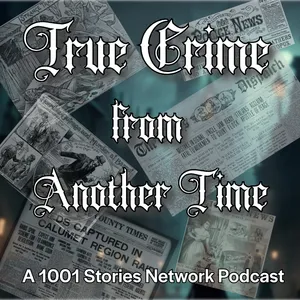
True Crime From Another Time is the ultimate true crime storytelling podcast! Using multiple sources, and digging deep for the hidden story, we bring you the real events as they occurred— the crimes that rocked small and large towns across America (and sometimes England), trials that became household conversations in their time, and unsolved mysteries begging for closure.
Latest Episodes
The most recent episodes — sign up to get AI-powered summaries of each one.
- Today16 min
THE REAL CASE BEHIND THE TEXAS CHAIN SAW MASSACRE: ED GIER (WISCONSIN 1957)
⭐ 1001 TRUE CRIME FROM ANOTHER TIME THE REAL CASE BEHIND THE TEXAS CHAINSAW MURDERS: ED GEIN (WISCONSIN, 1957) EXPLICIT Show Notes In this chilling episode of 1001 True Crime From Another Time, we travel back to rural Wisconsin in 1957 — to the quiet farming town of Plainfield, where nothing ever seemed to happen… until the day Sheriff Schley and his deputies stepped into the farmhouse of Ed Gein and found horrors that would haunt American culture forever. This is the real story behind The Texas Chainsaw Massacre — and behind Psycho, The Silence of the Lambs, and decades of cinematic nightmares. But the truth is stranger, sadder, and more disturbing than any movie ever dared to show. Using newspaper accounts, police records, and contemporary reporting, we reconstruct the investigation from the police point of view — from the missing‑persons search for Bernice Worden to the moment officers opened the shed and realized they were dealing with something far beyond murder. You'll hear: The eerie calm of Plainfield before the storm The clues that led deputies to Gein's door The shocking discoveries inside the farmhouse How Hollywood transformed Gein's crimes into modern horror Why his case still shapes American culture — especially as Halloween approaches This is not fiction. This is not Hollywood. This is true crime from another time — and one of the most unsettling cases in American history. ⭐ JOIN THE 1001 STORIES NETWORK 👉 Patreon: https://www.patreon.com/1001storiesnetwork (patreon.com in Bing) 👉 Website: https://BestOf1001Stories.com 👉 Facebook: https://BestOf1001Stories.com (redirects to the official community) ⭐ 1001 HEROES, LEGENDS, HISTORIES & MYSTERIES HATSHEPSUT: THE FEMALE PHARAOH THAT EGYPT TRIED TO VANISH — AND NEARLY SUCCEEDED Series: AMAZING ANCIENT LEGENDS — Episode Pitch #2 In our Amazing Ancient Legends series, we spotlight extraordinary figures whose stories were nearly erased — and whose legacies still echo across time. Episode #2 brings us one of the most astonishing women in world history: HATSHEPSUT — The Pharaoh Egypt Tried to Erase More than 3,400 years ago, Hatshepsut rose to become Pharaoh of Egypt — a woman ruling as king in a world dominated by men. Her reign was peaceful, prosperous, and visionary. She built monuments that still tower over the desert. She opened trade routes that enriched Egypt for generations. She commissioned art and architecture that defined an era. And then… someone tried to wipe her from history. Her statues were smashed. Her name was chiseled off monuments. Her legacy was buried under layers of political revenge and royal intrigue. This episode explores: How Hatshepsut rose to power in the 18th Dynasty Why her enemies tried to erase her memory The archaeological detective work that brought her story back The rediscovery of her mummy — mislabeled, forgotten, and finally identified Why her legacy matters today This is a story of ambition, mystery, erasure, and rediscovery — told in the sweeping, cinematic style of 1001 Heroes, Legends, Histories & Mysteries. ⭐ COMING NEXT IN THE SERIES THE AMAZON WOMEN: MYTH, MYSTERY & THE WARRIORS HISTORY COULDN'T EXPLAIN Next Sunday at 12:00 PM ET, we dive into the truth behind the legendary Amazon warriors — and why ancient historians struggled to explain them. ⭐ SUPPORT & CONNECT 👉 Patreon: https://www.patreon.com/1001stori
- 1 weeks ago19 min
THE BORGIA CRIME FAMILY AND THE LEGEND OF LUCRETIA BORGIA
🎙️ 1001 TRUE CRIME FROM ANOTHER TIME The Borgia Crimes: Murder, Power, and the Legend of Lucretia Part One — The Poisoned Name "For five hundred years, her name has been synonymous with murder by poison. The real shocker? She never poisoned anyone. Her only crime was being born into a family of murderers." 📋 EPISODE SUMMARY Lucretia Borgia is one of history's most infamous villains — beautiful, lethal, and supposedly armed with a ring filled with poison. But that version of Lucretia is a lie. A lie so well-constructed, so widely repeated, and so politically convenient that it has survived five centuries without serious challenge. In this episode we strip away the legend and go straight to the crimes — the real crimes, committed by the men around her. A Pope who bought his way to the throne of St. Peter. A brother who used assassination as casually as other men used conversation. And a family whose appetite for power left a trail of bodies from Rome to Naples to the steps of St. Peter's Basilica itself. Lucretia Borgia didn't hide behind a poisoned ring. She was the poison — the name her family's enemies used to discredit, deflect, and destroy. And that, in the end, is the true crime of this story. 🗂️ EPISODE STRUCTURE ⭐ Part One — The Rise of the Borgia Machine (approx. 10 minutes) Rome, 1492. Cardinal Rodrigo Borgia bribes, intimidates, and maneuvers his way to become Pope Alexander VI. His children — Cesare, Juan, and Lucretia — take their places in the machine. When Juan Borgia turns up in the Tiber, stabbed multiple times, everyone in Rome whispers the same name. The Pope opens an investigation. It lasts one day. The poison rumors begin — and Lucretia, who touched none of it, is the name that sticks. ⭐ Part Two — The Murder of Alfonso of Aragon (approx. 10 minutes) For once, Lucretia is genuinely happy. Alfonso is young, kind, and devoted. He is also politically inconvenient to Cesare, who wants Naples. Alfonso is attacked on the steps of St. Peter's — he survives. Lucretia refuses to leave his bedside. Then Cesare visits the sickroom, stands over the bed, says nothing, and walks out. Days later, Alfonso is strangled by assassins as he lies recovering. Lucretia screams. The legend grows. ⭐ Part Three — The Poisoned Reputation (approx. 10 minutes) Lucretia escapes to Ferrara, where she lives out her years as a respected duchess — kind, cultured, and beloved. But outside Ferrara, her name becomes a weapon. Enemies of the Borgias build the legend piece by piece: the poison ring, the deadly banquets, the murdered lovers. Not one accusation carries a shred of evidence. Her name was the mask that hid the Borgia murders. Her reputation was the final victim of the Borgia crimes. 👥 KEY FIGURES Name Who They Are Lucretia Borgia Daughter of Pope Alexander VI; accused of everything; guilty of nothing Rodrigo Borgia (Pope Alexander VI) Her father; arguably the most corrupt pope in history; rose to power through bribery Cesare Borgia Her brother; brilliant military commander; almost certainly behind Juan's murder
- 2 weeks ago18 min
THE MURDER OF JULIA BULETTE (1867) VIRGINIA CITY
⭐ 1001 TRUE CRIME FROM ANOTHER TIME SHOW NOTES — The Murder of Julia Bulette (1867) "The Belle of the Comstock and the Killer in the Shadows" Episode Summary In this episode, we travel back to Virginia City, Nevada, in the roaring days of the Comstock Lode — a place where silver flowed like water, saloons thumped with piano music, and danger lurked behind every swinging door. It was a world of wealth, vice, and volatility, and at the center of it all lived Julia Bulette, one of the most beloved women in the West. Julia wasn't just a courtesan. She was a celebrity. A friend to miners. A supporter of the fire brigade. A woman whose kindness and charisma made her a symbol of the Comstock boom. And in January of 1867, she was found brutally murdered in her own home. Her death shocked the entire mining camp and set off one of the most intense manhunts in Nevada history. 🔥 Inside the Case: A Town in Mourning Julia's murder was discovered early in the morning by a neighbor who noticed her house unusually quiet. Inside, Julia lay on the floor beside her bed — beaten, strangled, and robbed. Her home had been ransacked. Her jewelry and clothing were missing. A single footprint in the snow behind her house hinted at a killer who had waited in the darkness. The reaction was immediate and explosive. Miners abandoned their shifts. Firefighters rushed to the scene. Women wept openly in the streets. The Territorial Enterprise printed special bulletins demanding justice. Julia wasn't just another victim. She was their Julia — the woman who had danced at their celebrations, donated to their causes, and stood proudly beside them in parades. Her murder felt like a personal attack on the entire town. 🕵️ The Investigation: Blackburn & Kinkead Sheriff John Blackburn and Detective James H. Kinkead led the investigation — two men with reputations for calm under pressure and sharp investigative instincts. They found: a footprint behind Julia's house signs of a struggle missing valuables witnesses who heard suspicious noises rumors of a stranger seen near her home Their attention soon focused on John Millain, a French drifter with no steady work, a reputation for lurking around North Street, and a habit of trying to sell jewelry that didn't belong to him. When Blackburn went to question him, Millain fled — disappearing into the hills and triggering a massive frontier manhunt. 🏇 The Manhunt: Riders in the Snow Posses formed instantly. Firemen volunteered to ride out. Miners grabbed rifles and searched ravines, mine shafts, and creek beds. For three days, the Comstock hunted the man they believed had murdered Julia Bulette. Millain was finally captured near Dayton, Nevada — exhausted, cold, and armed with a knife. He was dragged back to Virginia City in chains as crowds lined the streets, shouting for justice. ⚖️ The Trial: Justice on the Frontier The trial was one of the most dramatic events in Nevada's early history. The courtroom overflowed with miners, firemen, gamblers, and townspeople who wanted to see justice done. The prosecution presented: witnesses who saw Millain near Julia's home stolen jewelry found in his possession the footprint behind her house his suspicious flight from town Millain insisted he was innocent. The jury didn't believe him. He was convicted of first‑degree murder and sentenced to hang. On April 24, 1868, Millain was executed in Carson City. 🌙 Why This Case Still Matters Julia Bulette's murder reveals the real Old West — not the romanticized version, but the one shaped by: isolation sudden violence thin law enforcement frontier justice communities that had to police themselves Her death shows how fragile safety was in a world where wealth attracted danger, and where justice depended on the determination of a few brave men willing to chase a killer across the desert. Julia wasn't just a victim. She was a symbol of Virginia City — its glamour, its grit, its contradictions, and its vulnerability. Her story remains one of the most famous and haunting crimes in Nevada history.
- 2 weeks ago11 min
THE LINDBERGH NURSEMAID TRIAL-THE OTHER SUSPECT-VIOLET SHARPE
1001 TRUE CRIME FROM ANOTHER TIME THE LINDBERGH NURSEMAID TRIAL: THE OTHER SUSPECT — VIOLET SHARPE (1932–1936) SHOW NOTES Episode Summary: In the wake of the 1932 Lindbergh baby kidnapping, the world focused on ransom notes, ladders, mob intermediaries, and the frantic hunt for a culprit. But behind the headlines, behind the Hopewell estate, behind the public grief of Charles and Anne Lindbergh, there was another story unfolding — quieter, more fragile, and ultimately more tragic. This is the story of Violet Sharpe, a young British maid employed in the Morrow household — Anne Lindbergh's family home in Englewood, New Jersey. She was not present at the Lindberghs' Hopewell estate the night the child was taken, yet she became entangled in the investigation almost immediately. Her interviews with police grew longer, more intense, and more frequent. Her answers shifted under pressure. Her nerves frayed. And on June 10, 1932, just before she was to be taken in for yet another round of questioning, Violet Sharpe was found dead in her room after ingesting cleaning fluid. The official ruling was suicide. But the story does not end there. What You'll Hear: Violet's life inside the Morrow household — her duties, her relationships, and her emotional temperament How the Lindbergh investigation expanded to include household staff, friends, acquaintances, and anyone who crossed the family's orbit The escalating interrogations that left Violet shaken, exhausted, and increasingly fearful The final hours before her death — and why her behavior didn't match the profile of someone preparing to take her own life The aftermath of her death and how investigators interpreted it The lingering question: What did Violet know? A Note on Violet's Death: This episode does not claim Violet was guilty of anything. It does not accuse her of participating in the kidnapping. It does not present conspiracy theories as fact. But it does acknowledge something important: Her decision to swallow cleaning fluid — a violent, painful, and impulsive act — did not align with the personality described by those who knew her. She was emotional, yes. She was frightened, certainly. But she was not known to be self‑destructive. And in a household under immense pressure, with investigators circling and reputations at stake, it is not unreasonable to consider whether someone else — perhaps another worker in the home — may have silenced her because she knew something that threatened to expose a larger, darker scheme. This episode explores Violet's story with care, respect, and historical grounding — while acknowledging that her death remains one of the most unsettling footnotes in the Crime of the Century. Context Within the Lindbergh Case Violet Sharpe's story is not a side plot — it is a window into the human cost of the investigation. Her fear, her contradictions, her isolation, and her tragic end reveal how far the pressure extended beyond the Lindberghs themselves. The kidnapping shattered more than one life. This episode pairs with our main feature, THE CRIME OF THE CENTURY: THE LINDBERGH BABY KIDNAPPING, offering listeners a deeper, more intimate look at the people caught in the storm.
- 3 weeks ago24 min
THE CRIME OF THE CENTURY: THE LINDBERGH BABY KIDNAPPING
SHOW NOTES — 1001 TRUE CRIME FROM ANOTHER TIME THE CRIME OF THE CENTURY: THE LINDBERGH BABY KIDNAPPING Episode Summary: In March of 1932, the nation was shaken to its core when the infant son of Charles and Anne Morrow Lindbergh was kidnapped from his crib in the family's secluded Hopewell, New Jersey home. A crude ladder. A ransom note. A frantic search that spiraled into one of the largest investigations in American history. Newspapers called it "The Crime of the Century," and nearly a hundred years later, the case still casts a long shadow over American law enforcement, media culture, and the psychology of fame. In this episode, we revisit the kidnapping from the ground up — the timeline, the suspects, the ransom negotiations, the discovery of the child's body, and the controversial conviction of Bruno Richard Hauptmann. We explore the political pressure, the investigative missteps, the media frenzy, and the lingering questions that continue to haunt historians and true‑crime researchers today. What You'll Hear: The Lindberghs' isolated Hopewell estate and the eerie quiet of the night the child disappeared The ransom notes and the strange, coded communications with the kidnapper The involvement of underworld intermediaries, including mob figures and self‑appointed "go‑betweens" The discovery of the child's body and the shift from rescue to homicide The intense hunt for Hauptmann — and the evidence that convicted him The controversies that remain: Was Hauptmann framed? Was he part of a larger conspiracy? Did investigators ignore critical leads? PLUS — A SPECIAL ANNOUNCEMENT: In three days, right here at 4pm ET, we're releasing a bonus episode: THE LINDBERGH BABY NURSE TRIAL (1932–1936) The tragic and little‑known story of Violet Sharpe, a young maid in the Morrow household whose repeated interrogations by police ended in her death — officially ruled a suicide. But was it? Her inconsistent statements, her mysterious social life, and her fear of further questioning have fueled decades of speculation. Some historians believe she may have known more than she admitted. Others argue she was a vulnerable young woman crushed by relentless pressure. Don't miss this companion episode — it adds a human, heartbreaking dimension to the Crime of the Century.
- 4 weeks ago16 min
THE HALLS-MILLS CHURCH MURDER MYSTERY (1922)
⭐ 1001 TRUE CRIME FROM ANOTHER TIME THE HALL–MILLS CHURCH MURDER MYSTERY (1922) Podcast Show Notes ⭐ Episode Summary In the early morning hours of September 16, 1922, two teenagers walking along the Raritan River stumbled upon a scene so bizarre and unsettling that it would ignite one of the most sensational murder investigations of the Jazz Age. Beneath a crabapple tree beside the old Phillips Farm Church lay the bodies of Reverend Edward Hall and Eleanor Mills, the choir singer with whom he had carried on a long‑rumored affair. Their bodies had been carefully arranged, Eleanor's throat slashed, Hall shot, and torn fragments of their love letters scattered around them like a cruel, theatrical confession. Within hours, the quiet town of New Brunswick, New Jersey, became the center of a media circus — reporters swarming the churchyard, photographers snapping images, and gossip spreading faster than the investigation could keep up. The case would expose small‑town secrets, social hierarchies, political influence, and a cast of characters so eccentric they seemed pulled from a detective novel. And at the center of it all stood the wealthy and formidable Hall family, whose power and connections shaped every twist in the investigation. Four years later, just when the murders seemed destined to remain unsolved, a new witness emerged — a woman known to the public only as "The Pig Woman." Her testimony would revive the case, electrify the press, and lead to one of the most chaotic trials of the 1920s. This is the story of forbidden love, scandal, privilege, and a double murder that still haunts New Jersey more than a century later. ⭐ What You'll Hear in This Episode The discovery of the bodies beneath the crabapple tree The secret affair between Reverend Hall and Eleanor Mills The strange staging of the crime scene and the torn love letters The powerful Hall family and their influence over the investigation The Stevens siblings — Frances, Charlotte, and Willie — and their eccentric reputations The botched early investigation and years of silence The dramatic arrival of Jane Gibson, "The Pig Woman," and her explosive testimony The 1926 trial that captivated the nation Why the case remains officially unsolved — and why it still fascinates true‑crime historians today ⭐ Key Figures in the Case Reverend Edward Wheeler Hall — respected minister, secret lover Eleanor Reinhardt Mills — choir singer, married mother of two Frances Hall — the minister's wealthy, stoic wife Charlotte and Willie Stevens — Frances's siblings, eccentric and influential Jane "The Pig Woman" Gibson — the witness whose testimony changed everything Henry de la Bruyère Carpender — cousin of Frances Hall, drawn into the investigation Local police and political power brokers — whose mishandling shaped the case's legacy ⭐ Historical Context The Hall–Mills case unfolded during the height of the Jazz Age — a time of sensational journalism, shifting social norms, and growing fascination with scandal. Newspapers competed fiercely for lurid details, often shaping public opinion more than the evidence itself. The trial became a national spectacle, with reporters describing the courtroom as "part circus, part theater." ⭐ Why This Case Endures The Hall–Mills murders remain unsolved not because the clues were lacking, but because the investigation was compromised from the start. Wealth, influence, contradictory testimony, and a witness whose credibility was constantly attacked all contributed to a verdict that satisfied no one. It is a story of: love and betrayal privilege and power eccentric witnesses and a community forever divided by what happened beneath the crabapple tree. ⭐ Credits Written and narrated by Jon Hagadorn Produced by 1001 Stories Network LLC Visit: <a title="www.bestof1001stories.com" href= "https://www.bestof1001stories.com/?utm_source=copilot.com" target= "_blank" rel="noopener" aria-label= "www
- Aug 16, 202618 min
THE TRUNK MURDERESS OF PHOENIX (1931)
1001 TRUE CRIME FROM ANOTHER TIME Episode: THE TRUNK MURDERESS OF PHOENIX (1931) In the summer heat of 1931, two battered steamer trunks sat abandoned at the Phoenix train station—unclaimed, unremarkable, and nearly forgotten. But when police finally pried them open, they uncovered a gruesome secret: the dismembered remains of two men, packed away like freight. What followed was a twisting trail of clues that led investigators to a woman no one would ever suspect—a quiet, seemingly ordinary figure whose life concealed a darkness few could imagine. In this episode, host Jon Hagadorn reopens one of the Southwest's most shocking forgotten crimes, tracing the investigation from the train depot to the courtroom, and exploring how a case so sensational could vanish from public memory for nearly a century. If you enjoy vintage true crime, historical mysteries, and cases that once dominated headlines, this is a story you won't want to miss. SUPPORT THE SHOW If you're enjoying 1001 TRUE CRIME FROM ANOTHER TIME, please take a moment to leave a review wherever you listen. Reviews help new listeners find the show and keep these stories alive. Share the episode with friends who love true crime, history, or a good mystery from the past. And if you'd like to support the 1001 Stories Network and help us keep these episodes coming, consider joining us at Patreon. Your support makes a huge difference. NEXT WEEK'S EPISODE Join us next Sunday for one of America's most haunting unsolved cases: THE HALL–MILLS CHURCH MURDER MYSTERY A minister. A choir singer. A scandalous affair. And a double murder that captivated the nation—yet remains unsolved to this day.
- Nov 16, 202529 min
JOLLY JANE TOPPAN: AMERICA'S FIRST FEMALE SERIAL KILLER
It was the Hearst newspaper story of the new century in 1902. Everybody loved Jolly Jane Toppan- the loving, caring nurse- until her patients, friends, enemies, and relatives started dropping like flies. When they finally caught up with her, she copped the insanity plea, and told the whole story, admitting to at least 31 deaths she had caused. But many believed she had done away with 100 souls in her 5 years of killing. Catch all our episodes and podcasts at www.bestof1001stories.com.
Get 1001 True Crime From Another Time with Host Jon Hagadorn summaries in your inbox
Free AI-powered daily recaps. Key takeaways, quotes, and mentions — in a 5-minute read.
Get Free Summaries →Free forever for up to 3 podcasts. No credit card required.
You Might Also Like
Listeners also like.

Murder: True Crime Stories
A true crime podcast examining notorious murders and their impact on victims, families, and communities.

Crimehub: A True Crime Podcast
Examines disturbing and unbelievable true crimes from modern history with in-depth storytelling and new cases released weekly.
True Crime Garage
Two hosts analyze real crime cases weekly, blending detailed research with casual conversation over beer.

True Crime Tonight
Five nights a week, a deep dive into true crime cases, celebrity scandals, and trials with analysis and listener discussions.

True Crime All The Time Unsolved
A weekly exploration of unsolved true crime cases, focusing on victims, evidence, and suspects with a balance of seriousness and dark humor.

Murder In America
A true crime podcast exploring infamous homicides in each U.S. state, blending investigative analysis with paranormal insights.

True Criminals
Investigative journalists revisit high-profile and overlooked crime cases with firsthand sources and deep reporting insight.

The Greatest True Crime Stories Ever Told
Anthology of complex true crime cases exploring female killers, justice, and societal forces through a psychological lens.

Crime House 24/7
True crime stories and in-depth investigations with new episodes daily, hosted by Vanessa Richardson.

True Crime All The Time
Two hosts explore notorious and obscure true crime cases, examining the psychology behind killers without sensationalism.

Crime Junkie
A weekly true crime podcast that explores infamous and lesser-known cases, from cold cases to missing persons, hosted by Ashley Flowers.

Unsolved Murders: True Crime Stories
Dramatized true crime stories explore cold cases and unsolved murders through immersive audio storytelling.
About 1001 True Crime From Another Time with Host Jon Hagadorn
True Crime From Another Time is the ultimate true crime storytelling podcast! Using multiple sources, and digging deep for the hidden story, we bring you the real events as they occurred— the crimes that rocked small and large towns across America (and sometimes England), trials that became household conversations in their time, and unsolved mysteries begging for closure.
Customized Recaps
AI-powered recaps with compact key takeaways, quotes, and insights.
Straight to Your Inbox
Get key takeaways from 1001 True Crime From Another Time with Host Jon Hagadorn in a 5-minute read.
Save Hours Every Week
Stay current on your favorite podcasts without falling behind.
Frequently Asked Questions
What is Podzilla's 1001 True Crime From Another Time with Host Jon Hagadorn daily summary?
It's a free AI-powered email that summarizes new episodes of 1001 True Crime From Another Time with Host Jon Hagadorn as soon as they're published. You get the key takeaways, notable quotes, and links & mentions — all in a quick read.
How does the 1001 True Crime From Another Time with Host Jon Hagadorn podcast summary work?
When a new episode drops, our AI transcribes and analyzes it, then generates a personalized summary tailored to your interests and profession. It's delivered to your inbox every morning.
Is this an official 1001 True Crime From Another Time with Host Jon Hagadorn product?
No. Podzilla is an independent service that summarizes publicly available podcast content. We're not affiliated with or endorsed by Host Jon Hagadorn.
Can I get summaries of other podcasts too?
Absolutely! The free plan covers up to 3 podcasts. Upgrade to Pro for 15, or Premium for 50. Browse our full catalog at /podcasts.
How often does 1001 True Crime From Another Time with Host Jon Hagadorn release new episodes?
1001 True Crime From Another Time with Host Jon Hagadorn publishes biweekly. Our AI generates a summary within hours of each new episode.
What topics does 1001 True Crime From Another Time with Host Jon Hagadorn cover?
1001 True Crime From Another Time with Host Jon Hagadorn covers topics including History, True Crime. Our AI identifies the specific themes in each episode and highlights what matters most to you.
Start getting 1001 True Crime From Another Time with Host Jon Hagadorn summaries tomorrow morning.
Free forever for up to 3 podcasts. No credit card required.
Free forever for up to 3 podcasts. No credit card required.